




What's Happening?
The international order is currently experiencing a significant shift towards multipolarity, characterized by the absence of a single hegemon and multiple states and regional blocs competing for influence. This new reality is emerging alongside the rapid
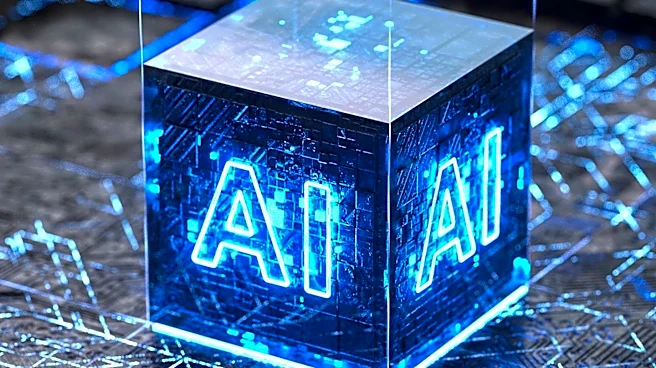
advancement of artificial intelligence (AI), which is intensifying existing threats and creating new ones that are harder to contain. According to an Al Jazeera opinion piece, AI is globalizing and turbocharging threats, while no single state is strong enough to impose order. Geopolitical blocs are hardening, and international cooperation is increasingly viewed as a weakness. The article highlights that larger states are struggling to convert power into control, citing examples like the U.S. inability to influence Iran and Russia's challenges in Ukraine. New technologies, such as inexpensive drones and AI-assisted targeting, are altering traditional military hierarchies. The piece also warns of potential future threats like pandemics originating in hidden labs, devastating cyberattacks from individuals, and AI systems spiraling beyond human control, potentially lowering barriers to developing nuclear and biological weapons.
Why It's Important?
This evolving international landscape poses critical challenges for global security and stability. The shift to multipolarity means that traditional U.S. foreign policy approaches, often reliant on a unipolar world order, may become less effective. The proliferation of AI-driven threats, from cyber warfare to autonomous weapons, demands urgent international attention and cooperation to prevent catastrophic outcomes. The hardening of geopolitical blocs and the perception of international cooperation as weakness could undermine efforts to address shared global challenges like climate change, pandemics, and nuclear risks. The inability of powerful states to impose order, even with vast military capabilities, suggests that strategies based on 'peace through strength' or 'zero-sum power dynamics' may be ineffective against modern, borderless threats. This necessitates a fundamental re-evaluation of security paradigms and a greater emphasis on multilateral institutions and international law to ensure collective security.
What's Next?
The defining challenge ahead is to couple multipolarity with multilateralism, meaning building effective international institutions and laws in a world where no single power can dictate terms. The article suggests that global standards must be developed and enforced, and international organizations need to be empowered to monitor, inspect, and report on activities within countries' borders. Recent positive signs include the WHO's Pandemic Agreement and the UN General Assembly's BBNJ Agreement, along with the UN Security Council's focus on AI security challenges. However, states are currently underinvesting in these global frameworks. Countries like Norway are prioritizing international law and multilateral institutions as core national security interests, advocating for global oversight and control over advanced AI models. The future will likely see continued efforts to strengthen international cooperation, but success will depend on political commitment and a willingness to compromise among states with diverse interests.
Beyond the Headlines
The deeper implication of this shift is a potential redefinition of what constitutes 'security' in the 21st century. Traditional notions of military might and territorial defense are being challenged by threats that are diffuse, technologically advanced, and recognize no borders. This necessitates a move beyond nationalistic approaches to security towards a more collective and cooperative model. The ethical dimensions of AI development and deployment, particularly concerning autonomous decision-making in warfare and surveillance, will become increasingly central to international debates. The article implicitly questions whether humanity can muster the necessary resolve to build robust international frameworks without first experiencing another global crisis of 'world-war-like proportions,' highlighting a critical test for global leadership and collective action. The long-term viability of existing international institutions like the UN, WTO, and WHO will depend on their ability to adapt to this new multipolar, AI-influenced reality.