




What's Happening?
NASA has initiated the Orbital Clarity Challenge, offering up to $500,000 to incentivize the development of new technologies capable of measuring Earth's extremely thin upper atmosphere. This initiative aims to improve predictions regarding how space
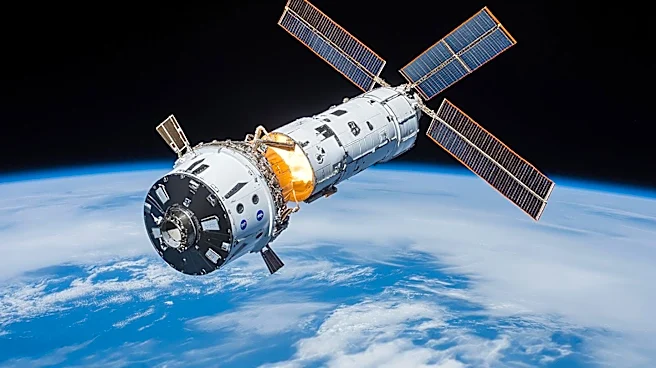
weather influences satellite orbits. The thermosphere, an upper layer of Earth's atmosphere, despite its thinness, significantly interacts with orbiting satellites. Changes in this region, particularly when solar activity causes the upper atmosphere to heat and expand, can alter atmospheric drag and consequently affect the paths of spacecraft. With the increasing number of satellites in low Earth orbit, accurately predicting these changes has become crucial. NASA is specifically seeking affordable technological solutions to provide clearer insights into this challenging-to-measure atmospheric region. This effort aligns with NASA's broader National Space Transportation Policy, which emphasizes maintaining superior space transportation capabilities and supporting commercial space innovation.
Why It's Important?
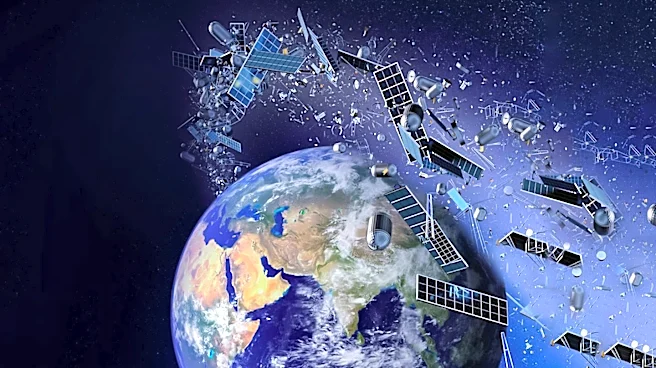
The ability to accurately measure and predict changes in Earth's upper atmosphere is vital for the burgeoning satellite industry and national security. As the number of satellites in low Earth orbit continues to grow, precise orbital management becomes increasingly complex. Unforeseen atmospheric drag caused by space weather can lead to orbital decay, potential collisions, and disruptions in satellite services, impacting communication, navigation, and Earth observation systems. Improved prediction capabilities will allow satellite operators to make timely adjustments, extending the operational lifespan of spacecraft and safeguarding valuable assets. This challenge also fosters innovation in atmospheric sensing technologies, potentially leading to more cost-effective and efficient methods for monitoring space weather effects. The success of this initiative will directly benefit U.S. industries reliant on satellite technology and enhance the nation's overall space infrastructure resilience.
What's Next?
The Orbital Clarity Challenge will proceed with the submission and evaluation of proposals for new technologies. Successful applicants will receive funding to develop and test their innovative solutions for measuring the thermosphere. Following the challenge, NASA will likely integrate the most promising technologies into its space weather monitoring and prediction systems. This could lead to the deployment of new sensors on future missions or the enhancement of existing satellite capabilities. The insights gained from these new technologies are expected to refine atmospheric models, leading to more accurate space weather forecasts and improved strategies for satellite constellation management. Furthermore, the development of affordable technologies could democratize access to critical space weather data, benefiting a wider range of stakeholders in the space industry.
Beyond the Headlines
The Orbital Clarity Challenge underscores a growing concern about the sustainability and safety of operations in low Earth orbit. Beyond the immediate impact on satellite operations, a deeper understanding of the thermosphere and its interaction with space weather has broader scientific implications for climate modeling and atmospheric research. The challenge also highlights the increasing intersection of national security and commercial interests in space, as both government and private entities rely heavily on a stable and predictable orbital environment. The development of affordable and effective monitoring technologies could set new standards for space situational awareness, potentially influencing international guidelines for space traffic management and debris mitigation. This initiative represents a proactive step towards addressing the long-term challenges of operating in an increasingly crowded and dynamic space environment.