





What's Happening?
Licking County has declared a state of emergency in response to severe flooding that occurred in August, significantly impacting multiple areas within the region. This declaration is a strategic move to position the county to receive crucial financial
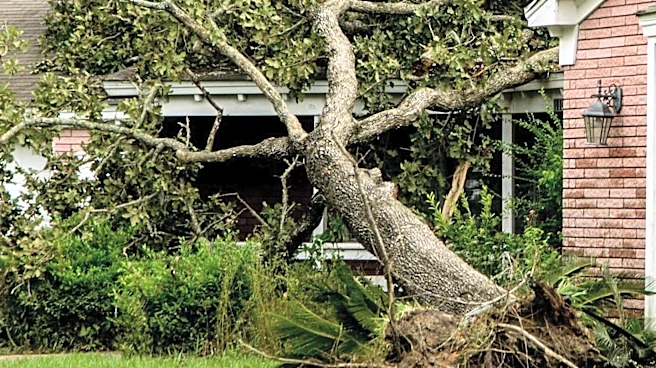
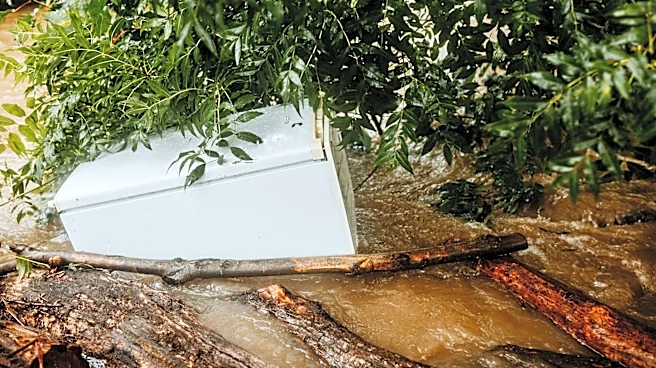
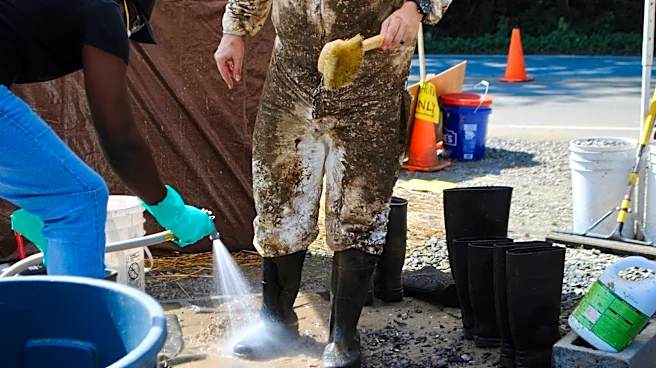
aid for residents affected by the floods. Pataskala was identified as the most severely impacted area, experiencing extensive damage to homes, roads, and property, including the dismantling of homes, trailers, trees, and some roads, along with instances of sewer backup. Other affected communities include Heath, Hebron, Buckeye Lake, and parts of Newark. Emergency Management Agency staff have been conducting damage assessments over the past few weeks, and recovery and clean-up efforts are currently underway. The declaration aims to facilitate the distribution of financial assistance to those severely impacted, helping them with recovery and repairs. Commissioner Tim Bubb emphasized the need to assist residents in recovering and moving forward with their lives, acknowledging that while not all 185,000 residents suffered severe damage, enough did to warrant this action. The disaster declaration was issued on August 27.
Why It's Important?
The declaration of a state of emergency in Licking County is critical for several reasons, primarily enabling access to financial aid that will directly support residents and businesses in their recovery efforts. This assistance is vital for mitigating the economic and social disruption caused by the severe August flooding. Statewide, the governor's office reported that over 50 homes and businesses were destroyed, more than 800 sustained major damage, and over 475 reported minor damage. For Licking County, this aid can help cover costs associated with temporary housing, home repairs, rental assistance, property replacement, counseling, and unemployment support. Furthermore, Governor Mike DeWine's request for federal disaster relief assistance for 23 counties, including Licking, underscores the widespread impact of the floods and the necessity of federal intervention. The potential for low-interest loans through the Small Business Administration will also be crucial for businesses to cover uninsured losses, preventing further economic hardship and aiding in their rebuilding. Without such declarations and subsequent aid, the financial burden on affected individuals and local governments would be immense, potentially leading to prolonged recovery periods and increased vulnerability for the community.
What's Next?
Following the state of emergency declaration, Licking County is now better positioned to receive financial aid, which will be distributed to severely impacted residents. Governor Mike DeWine has already requested federal disaster relief assistance for 23 counties, including Licking and Franklin, on September 2. This request specifically asks for the activation of an individual grant program to help cover various costs such as temporary housing, home repairs, rental assistance, property replacement, counseling, and unemployment aid. Additionally, DeWine has sought assistance through the Small Business Administration to provide low-interest loans for uninsured losses. Emergency Management Agency staff are continuing damage assessments, and multi-agency resource events are being organized to connect affected residents with short-term assistance. An initial event was held in Pataskala on September 3, involving organizations like United Way of Licking County, Salvation Army, Licking Memorial Hospital, and American Red Cross. Future events are planned for Hebron, Buckeye Lake, and Newark. Residents are encouraged to monitor the agency’s Facebook page for updates on these upcoming resource centers and other recovery efforts.
Beyond the Headlines
The declaration of a state of emergency in Licking County highlights a broader trend of increasing frequency and intensity of severe weather events, which poses significant long-term challenges for community resilience and infrastructure. Beyond immediate financial aid, this event underscores the need for enhanced disaster preparedness and mitigation strategies at local and state levels. The extensive damage, including the dismantling of homes and roads, points to vulnerabilities in existing infrastructure and the potential for future climate-related impacts. The involvement of multiple organizations in resource events, such as United Way, Salvation Army, and the American Red Cross, demonstrates the critical role of collaborative community efforts in disaster response. This collective action not only provides immediate relief but also fosters social cohesion and support networks essential for sustained recovery. The repeated need for state support, as evidenced by DeWine's earlier assistance to 13 counties for March storms, suggests a growing financial strain on state and federal resources, prompting a reevaluation of funding mechanisms and long-term investment in climate adaptation and resilient infrastructure.