
What's Happening?
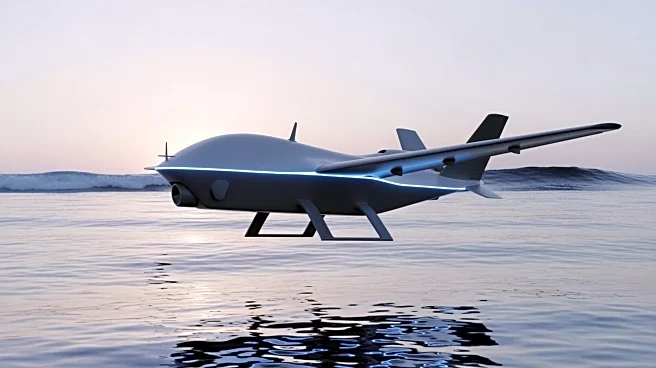
The U.S. Navy has conducted a test launch of a drone modeled after the Iranian Shahed-136 from the USS Santa Barbara. This drone, known as LUCAS, is an American adaptation designed for high-volume, low-cost
operations. The test was part of efforts by Task Force Scorpion Strike to introduce new unmanned systems to Central Command. The LUCAS drone can be launched from various platforms and is intended for surveillance and potential strike missions. The test signifies a strategic move to enhance the Navy's capabilities with affordable and effective unmanned technology.
Why It's Important?
The development and testing of the LUCAS drone underscore the U.S. military's focus on leveraging cost-effective technologies to maintain strategic advantages. By adopting and adapting proven designs like the Shahed-136, the U.S. can rapidly deploy effective solutions without extensive R&D. This approach could significantly enhance the Navy's operational flexibility, particularly in contested environments. The ability to produce these drones in large quantities at a low cost could also shift the balance in unmanned warfare, providing the U.S. with a scalable and adaptable tool for various missions.
What's Next?
Following the successful test, the U.S. Navy may proceed with further development and deployment of the LUCAS drone. This could involve refining its capabilities, such as weaponization and automated target recognition. The Navy might also explore integrating these drones into broader strategic operations, potentially expanding their use across different naval platforms. As the technology matures, it could lead to a reevaluation of current naval strategies and the role of unmanned systems in future conflicts.