





What's Happening?
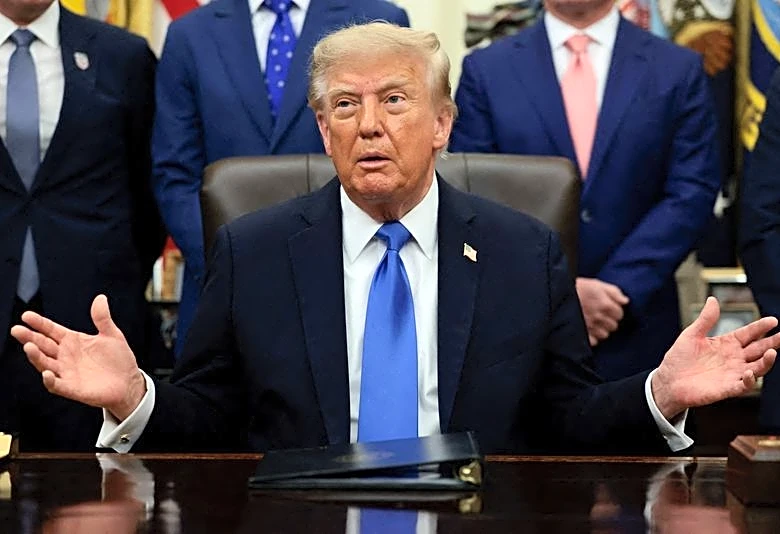
President Trump is expected to sign the Lindsey O. Graham Sanctioning Russia and Iran Act of 2026 into law. This legislation, which passed both the Senate and the House of Representatives, grants the President expanded authority to impose tariffs of up
to 100 percent on nations that continue to purchase crude oil and natural gas from Russia. The Act also targets maritime vessels associated with Russia's 'shadow fleet' and includes a five-year extension of existing sanctions against Iran, a condition President Trump advocated for. While the bill does not automatically apply these duties, it empowers the executive branch to implement them under specified legal conditions. The measure is considered the most significant American legislative package supporting Ukraine since President Trump's return to the White House, breaking a two-year parliamentary deadlock.
Why It's Important?
This Act is significant as it provides the U.S. administration with substantial new tools to exert economic pressure on Russia and its energy trading partners, including major buyers like India and China. The potential for tariffs of up to 100 percent on goods from countries continuing significant energy trade with Russia could drastically alter global trade dynamics and supply chains. For India, specifically, the framework establishes a mechanism for potential tariffs on its exports if it continues substantial purchases of Russian energy, impacting U.S.-India commercial relations. The legislation aims to intensify economic strain on Moscow, with proponents arguing it will compel Russian President Vladimir Putin to negotiate an end to the conflict in Ukraine. However, concerns have been raised by some lawmakers regarding the broad tariff authority granted to the President, despite their support for anti-Russia provisions.
What's Next?
Following President Trump's signing, the Act will grant the administration immediate authority to apply economic pressure. Within 30 days of enactment, the President is directed to increase import duties up to 100 percent on 'covered countries' – nations that make new purchases of Russian crude or gas, were among the top five importers of Russian energy in the preceding 12 months, or facilitated Russian sanctions evasion. The United States Trade Representative (USTR) will have the authority to adjust duty rates between zero and 100 percent if a country takes significant steps to reduce or halt Russian energy purchases. Bilateral trade discussions between the U.S. and India are anticipated to continue on the sidelines of the G20 Trade Ministers’ meeting in Wisconsin, where the implications of this new legislation will likely be a key topic.
Beyond the Headlines
The Sanctioning Russia and Iran Act of 2026 extends beyond immediate economic sanctions, delving into complex geopolitical and trade policy implications. The broad tariff authority granted to the President raises questions about the balance of power between the executive and legislative branches in setting trade policy, especially given recent U.S. Supreme Court rulings that invalidated broader tariff sets. The legislation also highlights the ongoing challenge of balancing national security objectives with economic interests, particularly for countries like India that rely on diversified energy sources. The Act's focus on Russia's 'shadow fleet' and the inclusion of Iran underscore a comprehensive strategy to disrupt adversaries' economic lifelines, potentially leading to long-term shifts in global energy markets and international shipping practices. The ethical dimension of imposing tariffs that could impact the economies of allied or neutral nations, even if indirectly, also warrants consideration.