
What's Happening?
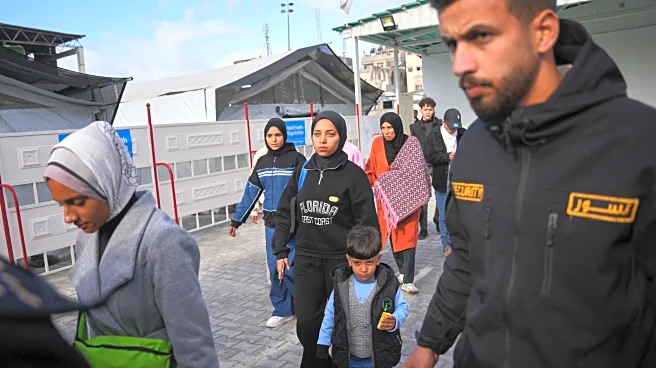
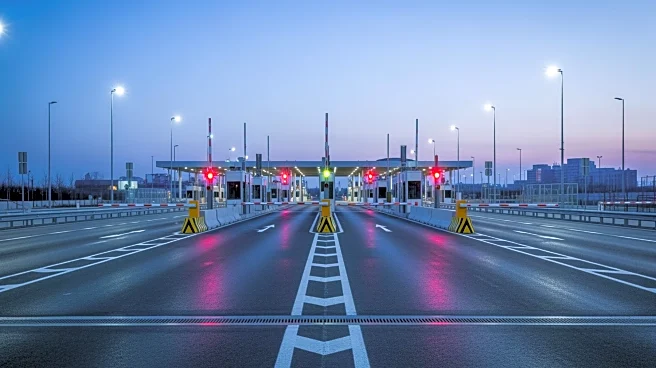
The Rafah crossing between Gaza and Egypt has reopened after a two-day closure, allowing a limited number of Palestinians to travel. This reopening is part of a U.S.-backed ceasefire agreement between Israel
and Hamas. The crossing had been closed due to operational confusion, and its reopening marks the first time since mid-2024 that it has been accessible. However, Palestinians returning to Gaza have reported experiencing delays and invasive searches by Israeli authorities, which Israel denies. The crossing is crucial for Palestinians seeking medical treatment unavailable in Gaza, with nearly 20,000 people reportedly needing to leave for such care. The reopening follows Israel's retrieval of the last hostage in Gaza and pressure from U.S. officials. Hamas has expressed willingness to discuss disarmament as part of ongoing ceasefire negotiations, proposing a 10-year weapons reduction period and an international peacekeeping presence in Gaza.
Why It's Important?
The reopening of the Rafah crossing is significant as it represents a critical lifeline for Gaza, allowing for the movement of people and goods in a region heavily restricted by Israeli control. The crossing's operation is a key component of the ceasefire agreement, which aims to stabilize the region and facilitate humanitarian aid. The reported delays and mistreatment highlight ongoing tensions and the complex dynamics between Israel, Hamas, and international stakeholders. The situation underscores the challenges in achieving lasting peace and the importance of international mediation in addressing humanitarian needs and political disputes. The potential disarmament discussions by Hamas could lead to a significant shift in the power dynamics within the region, impacting future negotiations and the overall security landscape.
What's Next?
The next steps involve continued negotiations between Hamas and international mediators, including Egypt, Qatar, and Turkey, to solidify the terms of the ceasefire and address the disarmament proposal. The upcoming meeting of the 'Board of Peace,' led by President Trump, aims to raise funds for Gaza's reconstruction, though Hamas has expressed concerns about foreign intervention. The international community will likely monitor the situation closely, with potential implications for U.S. foreign policy and regional stability. The effectiveness of the Rafah crossing's operation will be crucial in determining the success of the ceasefire and the humanitarian relief efforts in Gaza.
Beyond the Headlines
The reopening of the Rafah crossing and the associated negotiations highlight broader issues of sovereignty and self-determination for Palestinians. The involvement of international peacekeeping forces and the potential disarmament of Hamas raise questions about the future governance of Gaza and the role of external powers in shaping its political landscape. The situation also reflects the ongoing struggle for Palestinian rights and the challenges of achieving a balanced approach to peace that addresses both security concerns and humanitarian needs. The outcome of these developments could influence future peace processes and the broader Middle East geopolitical environment.