

What's Happening?
Germany's General Carsten Breuer and the UK's Air Chief Marshal Sir Richard Knighton have jointly advocated for increased military readiness in response to Russia's aggressive actions in Ukraine. In a letter published in The Guardian and German newspaper
Welt, they argue that rearmament is a moral necessity to protect Europe from potential Russian aggression. The military leaders emphasize that Russia's military posture has shifted westward, posing a heightened risk of conflict with NATO countries. They highlight the construction of munitions factories in the UK and the deployment of a German combat brigade on NATO's eastern flank as part of efforts to strengthen defense capabilities. Germany is significantly increasing its defense spending to modernize the Bundeswehr, reversing decades of military cutbacks.
Why It's Important?
The call for rearmament by German and UK military leaders underscores the growing concern over Russia's military activities and its potential threat to European security. This development is crucial as it signals a shift in defense policy, particularly for Germany, which has historically maintained a stance of military restraint. The increased defense spending and military readiness are intended to deter Russian aggression and ensure the protection of European nations. The emphasis on a 'whole-of-society' approach to defense highlights the need for resilient infrastructure and technological advancements, involving both public and private sectors. This move could lead to significant changes in defense policies and spending across Europe, impacting international relations and security dynamics.
What's Next?
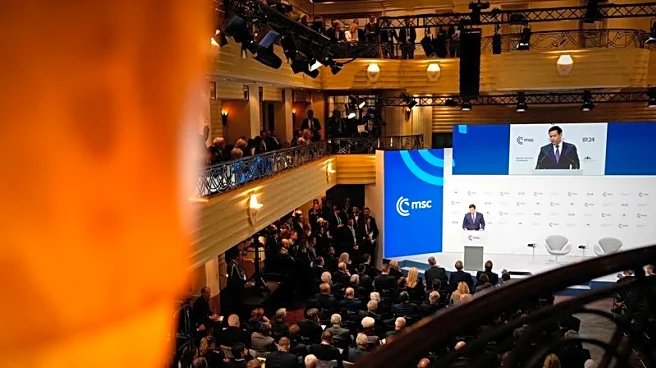
The advocacy for rearmament is likely to influence defense policies in other European countries, potentially leading to increased military spending and collaboration among NATO members. The focus on building a strong defense industry and recruiting more soldiers indicates a long-term commitment to enhancing military capabilities. As Europe confronts the threat posed by Russia, there may be further discussions and agreements at international forums, such as the Munich Security Conference, to coordinate defense strategies. The response from Russia and other global powers will be critical in shaping future security policies and alliances.
Beyond the Headlines
The push for rearmament raises ethical and cultural questions about the balance between military preparedness and peacekeeping. While the military leaders argue that strength deters aggression, there is a risk that increased militarization could escalate tensions and lead to an arms race. The call for a 'whole-of-society' approach also highlights the need for public support and involvement in defense initiatives, which may require shifts in public perception and policy. The long-term implications of this rearmament strategy could redefine Europe's role in global security and its relationship with Russia.