




What's Happening?
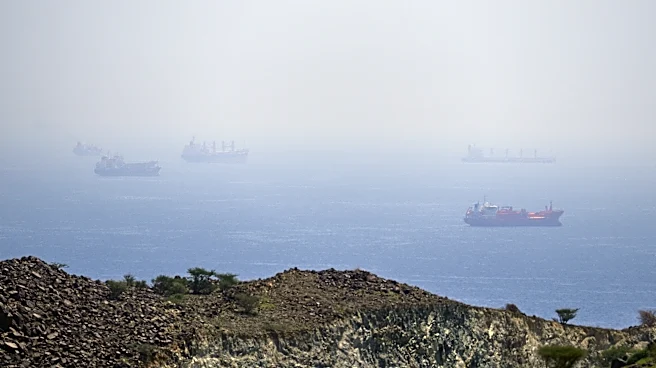
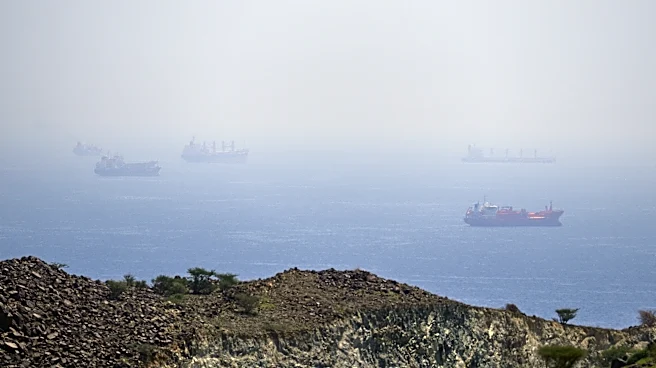
Iran is facing a critical situation as it scrambles to manage its overflowing oil supply due to a U.S. naval blockade. The country is reviving a 30-year-old oil tanker, Nasha, to serve as floating storage at Kharg Island, which is nearing its maximum
onshore capacity. The blockade, led by President Trump, targets all ships traveling to or from Iranian ports, significantly impacting Iran's oil exports. The situation is exacerbated by the seizure of Iranian-flagged oil tankers by U.S. forces and the addition of a third U.S. military aircraft carrier in the Middle East. Iran's oil export hub, controlling 90% of its crude exports, is at risk of congestion, posing a major economic challenge for the regime.
Why It's Important?
The blockade and storage issues highlight the geopolitical tensions affecting global oil markets. Iran's inability to export oil could lead to significant economic repercussions for the regime, potentially destabilizing the region further. The U.S. blockade is part of a broader strategy to pressure Iran into negotiations, but it also risks escalating military tensions. The situation underscores the vulnerability of global oil supply chains to geopolitical conflicts, with potential impacts on global energy prices and market stability.
What's Next?
The immediate future will likely involve continued diplomatic and military maneuvers as both the U.S. and Iran navigate the blockade's implications. Iran may seek alternative storage solutions or diplomatic resolutions to alleviate the pressure on its oil exports. The U.S. may continue to enforce the blockade while exploring diplomatic channels to resolve the conflict. The outcome of these efforts will have significant implications for regional stability and global energy markets.