





What's Happening?
The Vermont Department of Buildings and General Services, under the Scott administration, has installed bird noise deterrent devices at the Pavilion Building in downtown Montpelier. This action follows numerous incidents of individuals sleeping on the building's
porches and the discovery of human waste and debris on the property. The Pavilion Building houses the offices of Governor Phil Scott, the treasurer, attorney general, and the Vermont Supreme Court. Earlier this year, a port-a-let was installed near the building to address the issue of human waste, but the problem persisted. Deputy Commissioner Emily Kisicki stated that the noise devices, which emit loud bird calls, were installed to reduce the "nighttime occupancy of these spaces" and mitigate associated activities, rather than directly addressing people sleeping there. The devices are now set to operate from 11 p.m. to 4 a.m. via a timer.
Why It's Important?
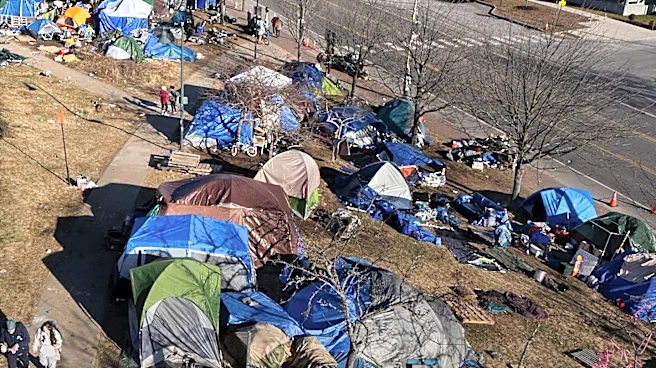
This development highlights the ongoing and complex issue of unsheltered homelessness in Vermont and the challenges faced by state and municipal leaders in addressing it. The installation of noise deterrents, while intended to manage public health and safety concerns, has drawn criticism from homelessness advocates who argue that such measures merely displace individuals without providing viable alternatives. The incident underscores the growing number of unhoused people living outdoors in Vermont, particularly after the state scaled back its motel voucher program. The use of deterrents rather than direct solutions for homelessness raises questions about the state's approach to a pressing social issue and its impact on vulnerable populations. It also reflects a broader tension between maintaining public spaces and providing compassionate support for those experiencing homelessness.
What's Next?
The effectiveness of the bird noise devices in deterring people from sleeping at the Pavilion Building remains uncertain, as reports indicate individuals were still encountered there after installation. The devices have reportedly reduced waste issues, but not necessarily prevented overnight occupancy. The situation is likely to continue sparking debate among state officials, homelessness advocates, and the public regarding appropriate responses to unsheltered homelessness. Advocacy groups, such as those represented by Zach Hughes of Montpelier's homelessness committee and Julie Bond of Good Samaritan Haven, are calling for collaborative solutions rather than deterrents. This suggests that future discussions will likely focus on increasing shelter capacity, expanding support services, and re-evaluating state policies related to homelessness, particularly the impact of changes to programs like the motel voucher system.
Beyond the Headlines
The installation of bird noise devices at a government building in Montpelier carries significant ethical and societal implications. While state officials cite public health and safety concerns, the measure is perceived by some as a punitive approach that further marginalizes unhoused individuals. This situation reflects a broader societal challenge in balancing the needs of public spaces with the humanitarian imperative to support those experiencing homelessness. The incident also brings to light the systemic issues contributing to unsheltered homelessness, such as the lack of affordable housing, insufficient social services, and the impact of policy decisions like the reduction of the motel voucher program. The debate surrounding these devices underscores the need for a more holistic and compassionate approach to homelessness that prioritizes long-term solutions, such as permanent supportive housing and comprehensive outreach, over temporary deterrents that may simply shift the problem elsewhere.