




What's Happening?
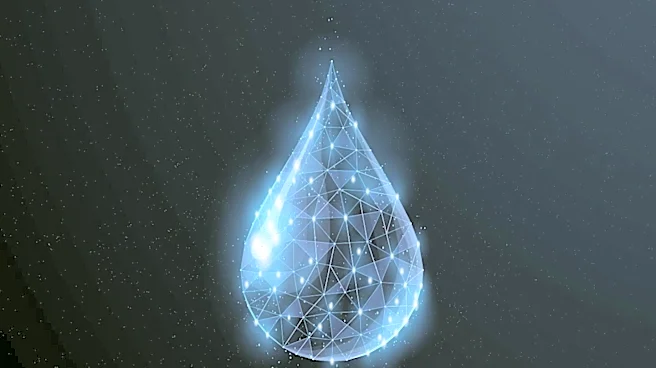
Scientists have successfully developed a DNA-powered computer that can perform calculations using billions of molecules within a small drop of water. This system, known as the Scaffolded DNA Computer (SDC), leverages the laws of physics to create a computing
system that is more efficient than conventional computers. Unlike traditional systems that require continuous energy input, the SDC is designed so that its most 'energetically favorable' state represents the correct answer, consuming less energy than other biological computers. The SDC operates by using short strands of DNA that interact with a longer DNA scaffold in salt water, assembling into structures based on programmed rules. This process allows the DNA molecules to compete and settle into a stable arrangement that encodes the computation's answer. Researchers, including Damien Woods from Maynooth University and Abeer Eshra, an assistant professor of computer science, confirmed that the system is programmable, reusable, and, while slower than silicon computers for simple tasks, is faster than other DNA computers. The team tested the SDC on various programs, including addition, multiplication, and error correction, with some calculations taking around 30 seconds and larger sums up to 14 hours.
Why It's Important?
This breakthrough in DNA computing holds significant implications for future technological advancements, particularly in areas requiring energy-efficient computation and molecular-level data processing. The SDC's ability to perform calculations with minimal continuous energy input could lead to the development of highly sustainable computing solutions, reducing the environmental footprint associated with large-scale data centers. Its potential applications extend to molecular data storage, offering a new direction for archival DNA data storage with built-in error correction properties. Furthermore, the concept of devices capable of running inside living cells opens up possibilities for advanced biomedical technologies, such as smart drug delivery systems or in-vivo diagnostics. While not intended to replace electronic computers, DNA-based systems could complement them in specialized environments, pushing the boundaries of what is possible in computing and biological integration. The reusability of the SDC also addresses a key limitation of earlier molecular computers, making it a more practical and scalable solution for future research and development.
What's Next?
The researchers acknowledge that the current work is primarily a demonstration of thermodynamics being used for useful calculations, indicating that significant theoretical work remains. Future directions include designing more suitable scaffolds for computation, improving the system's read-out mechanisms, and further investigating potential applications in DNA data storage. The team is actively working on these questions, suggesting ongoing research and development to refine the SDC's capabilities and explore its full potential. While immediate commercial applications are speculative, continued advancements could lead to the integration of DNA computing into specialized fields. The development of more complex algorithms and faster processing times will be crucial for the SDC to move beyond basic arithmetic and tackle more sophisticated computational challenges. Collaboration between computer scientists, biologists, and materials scientists will likely accelerate the transition of this technology from laboratory demonstration to practical implementation.
Beyond the Headlines
The development of the SDC highlights a fundamental shift in how we conceive of computation, moving beyond silicon-based electronics to harness the inherent properties of biological molecules. This approach challenges the traditional energy-intensive model of computing by leveraging the natural tendency of physical systems to move towards energetically favorable states. The ethical implications of computing within living cells, while currently speculative, will require careful consideration as the technology advances. The concept of 'molecular puzzle pieces' and self-assembling computational structures could inspire new paradigms in materials science and nanotechnology, leading to the creation of intelligent materials with embedded computational capabilities. This interdisciplinary research blurs the lines between biology, chemistry, and computer science, fostering a holistic approach to problem-solving. The long-term impact could be a redefinition of what constitutes a 'computer' and how computational power can be integrated into various aspects of life and technology, from environmental monitoring to personalized medicine.