
What's Happening?
Spain's commitment to renewable energy is under scrutiny following a significant blackout in April that affected homes, businesses, and public services across Spain and Portugal. The incident has sparked
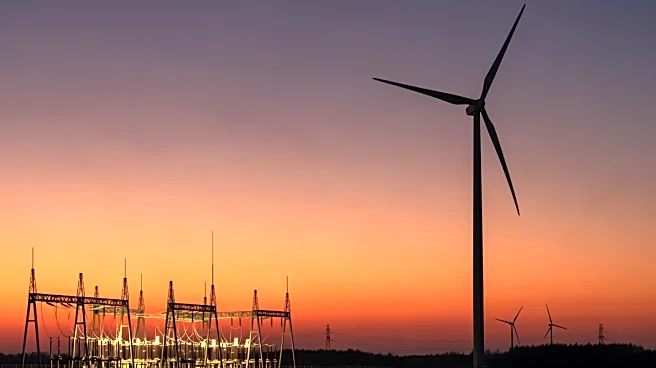
a political debate over the country's energy strategy, with opposition leaders criticizing the government's heavy reliance on renewables. The blackout occurred shortly after solar energy accounted for a record 61.5% of Spain's electricity mix, leading to accusations that the renewable focus may have contributed to the outage. However, the government and national grid operator, Red Eléctrica, have denied these claims, attributing the blackout to an 'unknown event' causing voltage oscillations. Meanwhile, Spain's nuclear industry is pushing back against government plans to close nuclear plants, arguing that nuclear energy provides necessary stability and complements renewable sources.
Why It's Important?
The debate over Spain's energy policy highlights the challenges of transitioning to renewable energy while maintaining grid stability. The incident underscores the need for a balanced energy mix that includes reliable sources like nuclear power to ensure continuous electricity supply. The political implications are significant, as the opposition uses the blackout to question the government's energy strategy, potentially influencing future policy decisions. The situation also reflects broader global discussions on how to effectively integrate renewable energy into national grids without compromising reliability. The outcome of this debate could impact Spain's energy policy and its role in the European Union's broader climate goals.
What's Next?
Spain's government and Red Eléctrica are awaiting further reports to determine the exact cause of the blackout, which could influence future energy policy decisions. The nuclear industry's request to extend the life of the Almaraz plant is under consideration, which could delay the planned closure of nuclear facilities. Political leaders and energy stakeholders will likely continue to debate the best path forward for Spain's energy mix, balancing renewable ambitions with the need for stable and reliable power sources. The outcome of these discussions could set a precedent for other countries facing similar energy transition challenges.
Beyond the Headlines
The situation in Spain raises broader questions about the feasibility of rapid transitions to renewable energy without adequate infrastructure and backup systems. It highlights the potential risks of over-reliance on intermittent energy sources and the importance of maintaining a diverse energy portfolio. The debate also touches on the cultural and political dimensions of energy policy, as different stakeholders advocate for varying approaches based on environmental, economic, and security considerations. The resolution of Spain's energy challenges could influence global energy strategies and the pace of the renewable transition.