






What's Happening?
The Lincoln Memorial, located at the western end of the National Mall in Washington, D.C., remains a prominent symbol of unity, equality, and American democracy. Designed by architect Henry Bacon and completed in 1922, the neoclassical monument draws
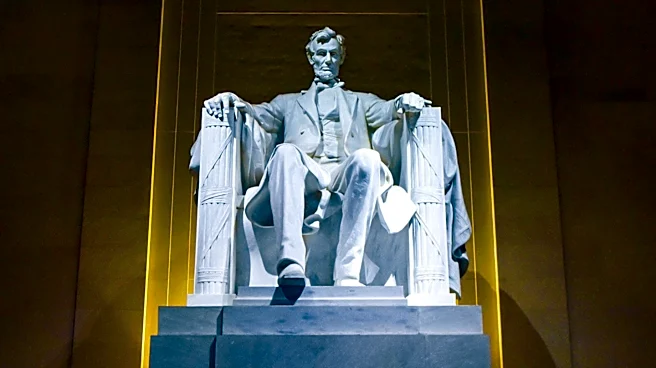
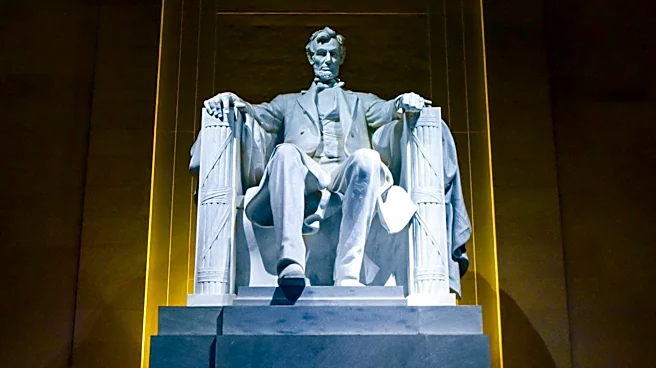
inspiration from classical Greek architecture, particularly the Parthenon. It features 36 massive Doric columns, representing the 36 states in the Union at the time of President Lincoln’s death in 1865. At its center is a large seated statue of Abraham Lincoln, sculpted by Daniel Chester French, portraying him in a calm and thoughtful pose. Behind the statue are inscriptions of his Gettysburg Address and Second Inaugural Address, both emphasizing national healing and unity. The memorial's design, utilizing white marble and open space, creates a sense of dignity and reflection, with its alignment to the Reflecting Pool and Washington Monument enhancing its visual impact. The monument is managed by the National Park Service and attracts millions of visitors annually.
Why It's Important?
The Lincoln Memorial's significance extends beyond its architectural grandeur, serving as a powerful cultural space for pivotal moments in U.S. civil rights history. It stands as a tribute to President Lincoln's leadership during the Civil War, his commitment to preserving the Union, and his efforts to abolish slavery, notably through the Emancipation Proclamation in 1863. The memorial has also become a central stage for advocating civil rights. In 1939, Marian Anderson performed there after being denied access to Constitution Hall due to racial discrimination. Later, in 1963, Martin Luther King Jr. delivered his iconic 'I Have a Dream' speech on its steps during the March on Washington. These events transformed the memorial into a living symbol of equality, justice, and social progress, reinforcing its role as a gathering place for public reflection and protests on issues of freedom and human rights. Its enduring presence underscores the ongoing pursuit of these ideals in American society.
What's Next?
The Lincoln Memorial is expected to continue its role as a significant national landmark and a focal point for public discourse on American values. As a site managed by the National Park Service, it will remain accessible to millions of visitors each year, serving as an educational resource and a place for reflection on President Lincoln's legacy and the nation's journey toward equality. Future events and commemorations related to civil rights, national unity, and historical milestones are likely to continue utilizing the memorial's iconic setting. Its symbolic importance ensures it will remain a platform for expressing democratic ideals and addressing contemporary societal challenges, further solidifying its place in the ongoing narrative of American identity and progress.
Beyond the Headlines
The Lincoln Memorial embodies a deeper narrative about the evolution of American identity and the continuous struggle for its founding principles. Its design, inspired by classical Greek architecture, subtly links American democracy to ancient ideals of governance and justice, suggesting a timeless pursuit of these values. The transformation of the memorial from a tribute to an individual leader into a dynamic stage for civil rights movements highlights a crucial aspect of American culture: the ability of public spaces to adapt and become imbued with new meanings through collective action. This evolution underscores the idea that national monuments are not static symbols but living entities that reflect the changing aspirations and challenges of a society. The memorial's enduring power lies in its capacity to inspire both reverence for the past and a call to action for the future, making it a profound touchstone for ethical and cultural reflection in the U.S.