


What's Happening?
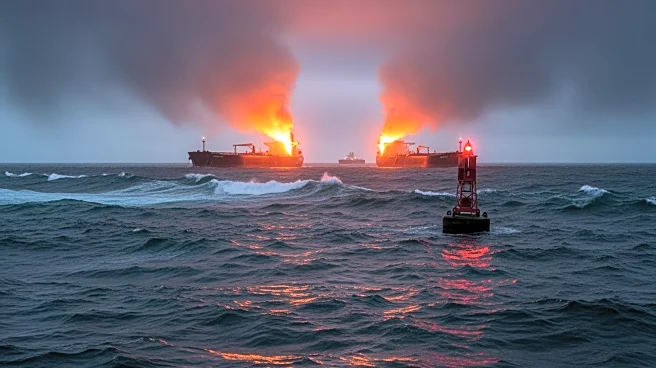
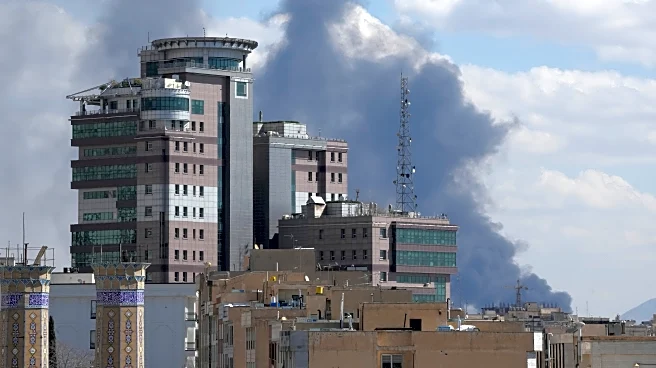
The ongoing conflict between the U.S., Israel, and Iran has spread to the strategic Strait of Hormuz, with multiple oil tankers coming under fire. The Palau-flagged oil tanker Skylight was targeted near the Khasab port in Oman, resulting in the evacuation
of its 20-person crew and injuries to four individuals. The attack is part of a broader escalation following U.S. and Israeli strikes on Iranian targets. The Gulf Cooperation Council has condemned the attacks, attributing them to Iranian forces. The situation has led to increased security concerns, with some shipping companies avoiding the Strait of Hormuz due to the heightened risk.
Why It's Important?
The Strait of Hormuz is a vital artery for global oil transportation, with about 20% of the world's oil supply passing through it. The conflict poses a significant threat to international shipping and energy markets, potentially leading to disruptions in oil supply and increased prices. The attacks highlight the vulnerability of maritime routes in conflict zones and the potential for military engagements to impact global trade. The situation underscores the need for international cooperation to ensure the safety of shipping lanes and to address the underlying geopolitical tensions.
What's Next?
The conflict in the Strait of Hormuz may lead to further military engagements and diplomatic efforts to de-escalate tensions. The international community, including maritime organizations, may seek to enhance security measures and provide guidance to shipping companies operating in the region. The situation could prompt discussions on alternative routes and strategies to mitigate the impact on global oil supply. Ongoing monitoring and analysis will be required to assess the evolving security landscape and its implications for international trade and energy markets.