
What's Happening?
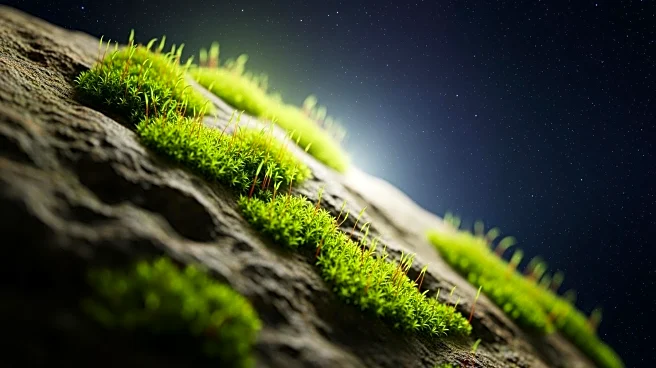
Japanese researchers from Hokkaido University have conducted a study to test the resilience of moss in outer space. They placed moss sporophytes on the exterior of the International Space Station (ISS) to observe their survival in the harsh conditions
of space. The study, published in iScience, revealed that nearly all the sporophytes survived the extreme environment, including low gravity, high UV levels, and fluctuating temperatures. The moss, known as Physcomitrium patens or spreading earthmoss, demonstrated a remarkable ability to withstand conditions that are typically lethal to most living organisms. After 238 days in space, 80% of the moss spores remained viable, with 90% of these capable of germination upon return to Earth.
Why It's Important?
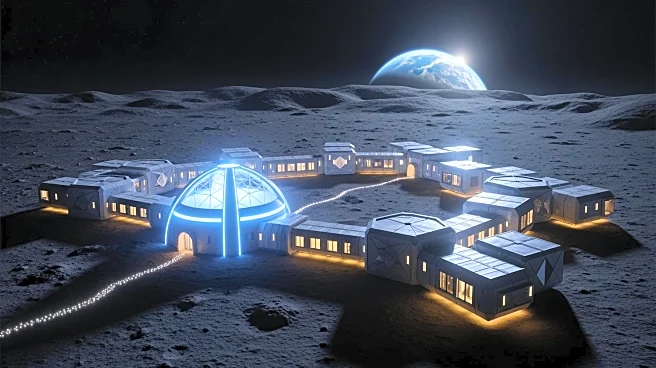
This research highlights the potential for life forms from Earth to survive and possibly thrive in extraterrestrial environments. The findings suggest that certain plant species, like moss, could be used in future space missions to support life or even terraform other planets. The ability of moss to endure space conditions opens up possibilities for growing plants in space, which could be crucial for long-term space exploration and colonization. This study also contributes to our understanding of the resilience of life and the potential for biological systems to adapt to extreme environments beyond Earth.
What's Next?
The research team plans to further investigate the long-term survival capabilities of moss in space, hypothesizing that the spores could survive for up to 15 years on the ISS's exterior. This ongoing research could pave the way for future experiments aimed at growing plants in space or on other planets, potentially leading to breakthroughs in space agriculture and sustainability. The study's findings may also inspire new strategies for using resilient plant species in challenging environments on Earth.