



What's Happening?
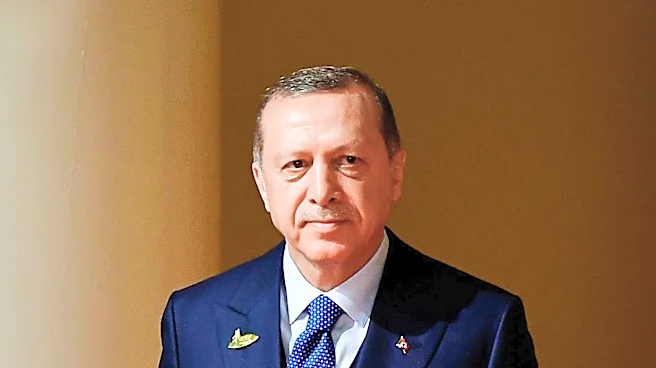
Turkish President Recep Tayyip Erdogan recently received the credentials of newly appointed ambassadors from five countries: India, Mali, the Netherlands, El Salvador, and Nigeria. The ceremonies took place at the Presidential Complex in Ankara. During
these events, each ambassador, including Indian Ambassador Rudra Gaurav Shresth, Malian Ambassador Oumarou Maiga, Dutch Ambassador Alle Dorhout, Salvadoran Ambassador Eduardo Alfonso G. Grande, and Nigerian Ambassador Saidu Usman Nasamu Dakingari, presented their letters of credence to President Erdogan. Following the formal presentations, the ambassadors introduced their embassy staff members and families and participated in commemorative photographs with the Turkish President. Separate meetings were then held between President Erdogan and each ambassador, indicating a series of individual diplomatic discussions.
Why It's Important?
The reception of credentials from new ambassadors is a standard but significant diplomatic procedure that formally recognizes the representatives of foreign nations. For Turkey, this event signifies the continuation and strengthening of its bilateral relations with India, Mali, the Netherlands, El Salvador, and Nigeria. These diplomatic engagements are crucial for fostering international cooperation, facilitating trade, and addressing global challenges. The individual meetings held after the ceremonies suggest that President Erdogan engaged in specific discussions with each ambassador, likely covering areas of mutual interest, potential collaborations, and existing issues. This process is vital for maintaining diplomatic channels and ensuring effective communication between Turkey and these diverse nations, impacting various sectors from economic partnerships to cultural exchanges.
What's Next?
Following the presentation of credentials and subsequent meetings, the newly appointed ambassadors will officially commence their duties in Ankara. This will involve engaging with Turkish government officials, business leaders, and civil society to advance their respective countries' interests. These diplomatic interactions are expected to lead to further discussions on bilateral agreements, trade opportunities, and cultural exchange programs. The establishment of these formal diplomatic ties will likely pave the way for increased cooperation in areas such as economic development, security, and regional stability. The ongoing presence of these ambassadors will serve as a continuous channel for dialogue and collaboration between Turkey and their represented nations.
Beyond the Headlines
The act of receiving credentials, while procedural, underscores the intricate web of international diplomacy and the importance of formal representation in global affairs. Beyond the immediate implications of bilateral relations, these ceremonies reflect Turkey's broader foreign policy objectives and its engagement with a diverse range of countries across different continents. The presence of ambassadors from Asia (India), Africa (Mali, Nigeria), Europe (Netherlands), and Latin America (El Salvador) highlights Turkey's commitment to a multi-faceted foreign policy. This diplomatic outreach can contribute to Turkey's influence on the international stage, potentially impacting its role in regional conflicts, economic partnerships, and its standing within international organizations. The individual meetings also offer a platform for addressing nuanced issues and fostering deeper understanding between nations.