
What's Happening?
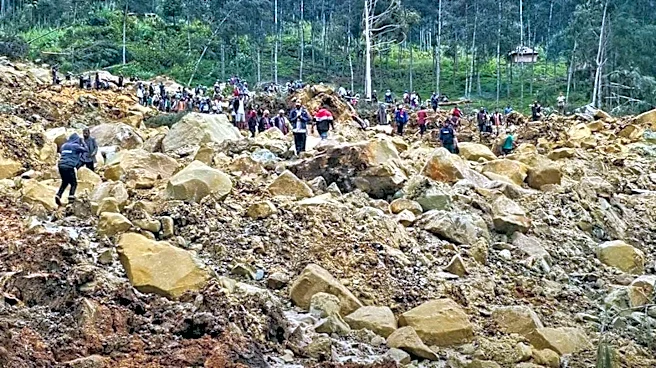
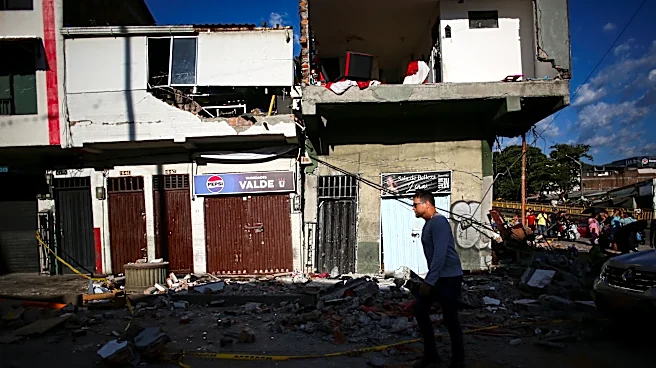
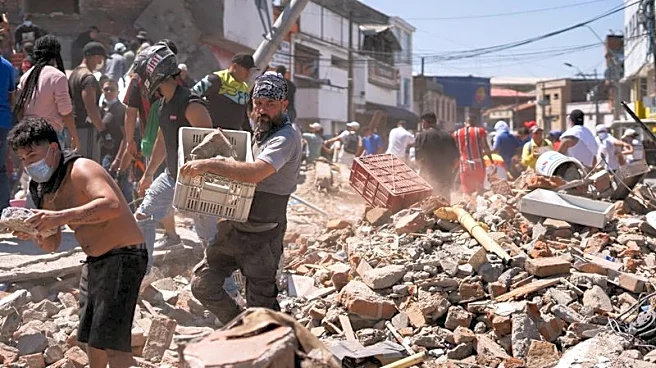
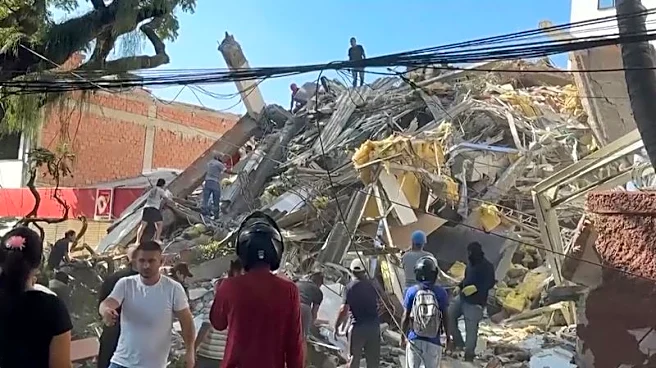
A powerful earthquake of magnitude 7.4 struck the western region of Colombia, with its epicenter in San José del Palmar, Chocó. The seismic event has resulted in 224 fatalities and over a thousand injuries,
according to the latest reports from the Colombian Association of Capital Cities. The quake has caused significant structural damage, with 86 buildings collapsed and seven airports suspending operations. The city of Pereira has reported the highest number of casualties among the affected capitals. The Colombian diaspora in Spain, numbering over 676,000, is experiencing heightened anxiety as they struggle to contact family members in the affected areas due to disrupted communications. Efforts are underway to organize aid, with the Red Cross being a primary channel for assistance.
Why It's Important?
The earthquake's impact extends beyond Colombia, affecting the large Colombian community in Spain, which is the second-largest foreign group in the country. The disaster highlights the vulnerabilities in communication and infrastructure in Colombia, particularly in remote areas like Chocó, which are historically underserved. The event underscores the need for improved disaster preparedness and response mechanisms in regions prone to natural disasters. The Colombian government's declaration of a national disaster and the mobilization of rescue teams are critical steps in addressing the immediate needs of affected communities. The situation also calls attention to the role of international aid and diaspora communities in providing support during crises.
What's Next?
As rescue operations continue, the focus will be on reaching isolated communities and assessing the full extent of the damage. The Colombian government and international aid organizations are expected to coordinate efforts to provide relief and rebuild infrastructure. The diaspora in Spain and other countries may play a significant role in fundraising and organizing aid shipments. Long-term recovery will require substantial investment in rebuilding and strengthening infrastructure to withstand future seismic events. The situation may also prompt discussions on improving emergency communication systems and disaster response strategies in Colombia.
Beyond the Headlines
The earthquake has brought to light the socio-economic disparities in Colombia, particularly in regions like Chocó, which suffer from inadequate infrastructure and services. The disaster may catalyze policy discussions on addressing these inequalities and improving living conditions in marginalized areas. Additionally, the event highlights the emotional and psychological toll on diaspora communities, who face the challenge of supporting loved ones from afar. The role of social media and digital communication in bridging these distances, despite their limitations, is also a significant aspect of the diaspora's experience during such crises.