


What's Happening?
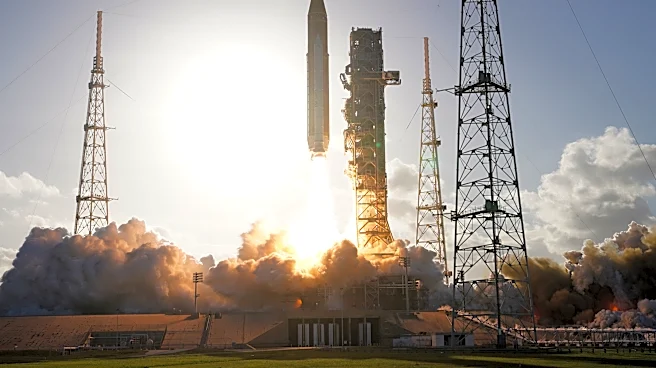
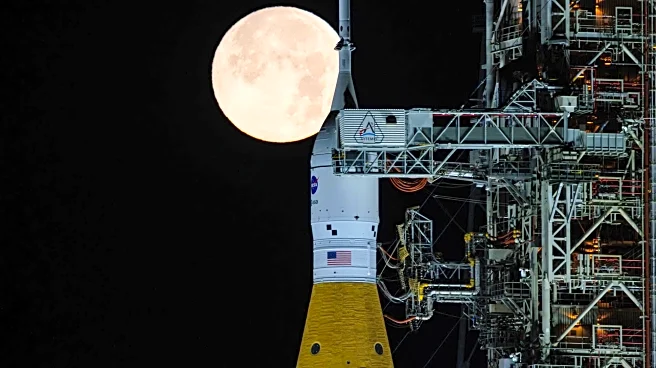
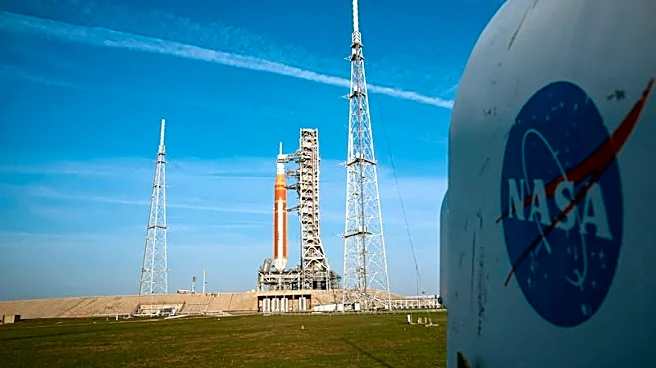
NASA is preparing for the launch of Artemis II, a significant mission that marks the first time humans will travel beyond low Earth orbit since the Apollo missions of the 1970s. The mission is scheduled to launch on April 1, with a diverse crew consisting
of Commander Reid Wiseman, Pilot Victor Glover, Mission Specialist Christina Koch, and Mission Specialist Jeremy Hansen. This mission is notable for its inclusion of a woman, a person of color, and a non-U.S. citizen, reflecting a broader commitment to diversity. The mission aims to test life support systems and the Orion capsule's ability to protect against space radiation, setting the stage for future moon and Mars missions. Despite previous delays due to technical issues, the launch is now on track, with favorable weather conditions predicted.
Why It's Important?
The Artemis II mission is a critical step in NASA's long-term goals of returning humans to the moon and eventually reaching Mars. By testing key systems and procedures, this mission lays the groundwork for future exploration and scientific discovery. The inclusion of a diverse crew highlights NASA's commitment to representation and inclusivity in space exploration. Additionally, the mission is part of a broader geopolitical context, as the U.S. aims to maintain its leadership in space exploration amidst competition from other nations, particularly China. Success in this mission could bolster U.S. technological and scientific prestige on the global stage.
What's Next?
Following Artemis II, NASA plans to continue its Artemis program with subsequent missions. Artemis III, scheduled for 2027, will focus on testing systems in low Earth orbit, while Artemis IV aims to land astronauts on the moon by 2028. These missions are part of a larger strategy to establish a sustainable human presence on the moon, with the ultimate goal of preparing for human exploration of Mars. The success of Artemis II will be crucial in ensuring the viability and safety of these future missions.