



What's Happening?
The Central Board of Indirect Taxes & Customs (CBIC) has initiated an outreach program in New Delhi to promote the Duty Deferment Scheme for Eligible Manufacturer Importers (EMI). This initiative, announced in the Union Budget 2026-27, aims to facilitate
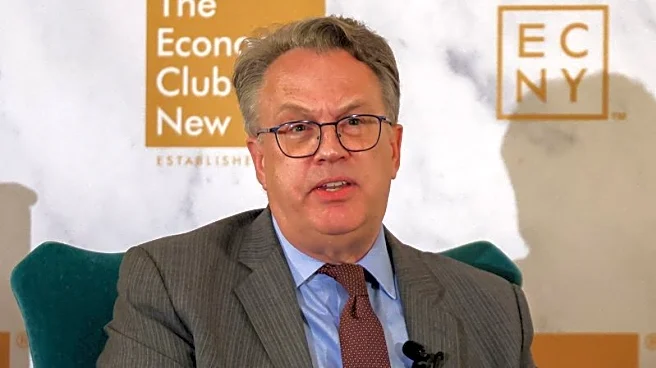
trade by allowing deferred payment of import duties. The scheme is designed to enhance the commercial viability of manufacturer importers by improving liquidity and enabling better import scheduling. Key figures such as Yogendra Garg, Member (Customs) of CBIC, and Manish Kumar, Chief Commissioner of Delhi Customs, participated in the event, highlighting the scheme's benefits. The EMI Scheme allows eligible importers to clear goods without upfront duty payment, with duties payable monthly. It supports the Make in India initiative by strengthening domestic manufacturing and improving supply chain efficiency.
Why It's Important?
The Duty Deferment Scheme is significant as it aims to reduce the financial burden on manufacturer importers, thereby enhancing their global competitiveness. By improving liquidity and expediting cargo clearance, the scheme supports the broader economic goal of boosting domestic manufacturing. This initiative aligns with the Make in India campaign, which seeks to transform India into a global manufacturing hub. The scheme's trust-based approach is expected to foster a more collaborative compliance environment, potentially leading to increased foreign investment and economic growth. The inclusion of MSMEs in the scheme further underscores its potential to drive economic inclusivity and support small businesses.
What's Next?
Eligible manufacturer importers can apply for the scheme online through the AEO portal, with the scheme becoming operational from April 1, 2026. The scheme will be valid for two years, until March 31, 2028. Stakeholders are encouraged to provide feedback to refine the scheme further. The CBIC's initiative is expected to prompt other government bodies to consider similar measures to support economic growth and trade facilitation. The success of this scheme could lead to its extension or the introduction of additional supportive measures for the manufacturing sector.