









What's Happening?
The University of Cincinnati recently hosted a conference focused on the Abraham Accords, aiming to explore regional collaboration and cooperation opportunities. The event, supported by the Academic Engagement Network, featured diplomats, policymakers,
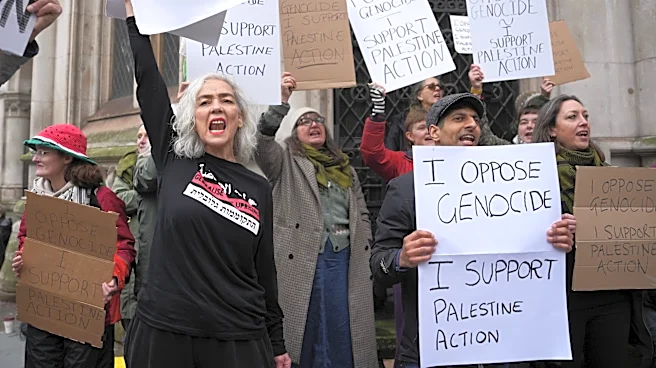
and academics discussing topics such as interfaith Zionism and the Accords' impact on culture and technology. However, the conference was marred by protests organized by the university's Students for Justice in Palestine chapter. Demonstrators gathered outside, using loudspeakers to amplify their shouts, and some registered students disrupted the final session by reading prepared statements against the presence of Israeli guests. The situation required a significant police presence to ensure safety, highlighting the challenges faced by Jewish and Israeli-related events on campuses.
Why It's Important?
The disruption of the conference underscores the growing tensions and challenges faced by Jewish and Israeli-related events in academic settings. The protests reflect a broader trend of increasing antisemitism and anti-Israel sentiment on college campuses, which can lead to the marginalization of Jewish voices and perspectives. This environment not only affects Jewish students and faculty but also impacts the academic community's ability to engage in open dialogue and critical thinking. The need for heightened security, often referred to as the 'Jewish tax,' places a financial and logistical burden on institutions, potentially discouraging them from hosting similar events in the future. The situation calls for a reevaluation of campus policies to ensure inclusivity and protect free expression.
What's Next?
In response to such disruptions, academic institutions may need to reassess their security measures and policies regarding protests to balance free speech with safety. There is a call for campus leaders, including faculty and administrators, to uphold the core values of the academy by fostering an environment that encourages diverse perspectives and open dialogue. Organizations like the Academic Engagement Network continue to work towards promoting Jewish visibility and countering antisemitism, but broader institutional support is necessary. Future events may require more strategic planning and collaboration with law enforcement to prevent similar incidents and ensure the safety of participants.
Beyond the Headlines
The protests at the University of Cincinnati highlight a deeper issue of how academic spaces are becoming battlegrounds for ideological conflicts. The increasing polarization and hostility towards certain groups can undermine the educational mission of universities, which is to foster critical thinking and debate. This trend may lead to a chilling effect, where controversial topics are avoided, and certain voices are silenced. The long-term implications could include a generation of students less equipped to engage with complex global issues due to a lack of exposure to diverse viewpoints. Addressing these challenges requires a concerted effort from all stakeholders in the academic community to reaffirm the principles of inclusivity and intellectual freedom.