






What's Happening?
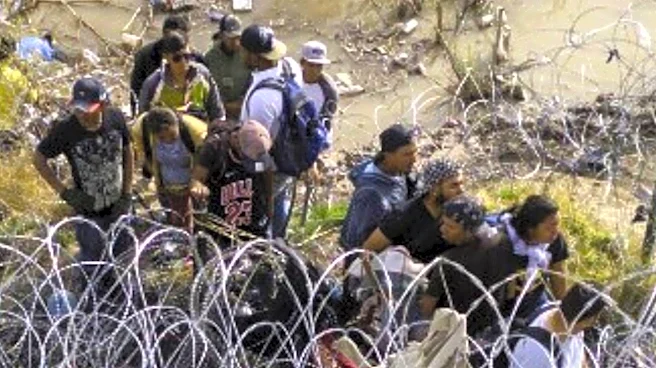
The Dominican Republic has decided to keep its border with Haiti open, with the Ministry of Defense stating that the current security situation does not necessitate extraordinary restrictions. This decision was made following a strategic meeting led by
Defense Minister Lt. Gen. Carlos Antonio Fernández Onofre, which included senior officials from the Dominican Army, Navy, Air Force, and intelligence personnel. The review assessed developments in Haiti and their potential implications for Dominican national security. Authorities will maintain existing security arrangements and continue to monitor the situation across the border, without announcing any new restrictions. Commercial activity and daily life in border communities are expected to continue as usual, while military officials will enhance surveillance through intelligence analysis and inter-force coordination.
Why It's Important?
The Dominican Republic's decision to keep its border open is significant given the ongoing instability and gang violence in neighboring Haiti. This approach reflects a careful balance between national security concerns and the practical realities of cross-border trade and movement, which are vital for the livelihoods of communities on both sides of the Hispaniola island. While other nations might consider stricter border controls in similar circumstances, the Dominican Republic's stance indicates a strategic assessment that existing measures are sufficient, or that the economic and social costs of closure outweigh the perceived security benefits. This decision could also be interpreted as a signal of confidence in their current security apparatus and intelligence capabilities to manage potential spillover effects from Haiti's crisis, rather than resorting to drastic measures that could further destabilize the region economically.
What's Next?
The Dominican Republic will continue to monitor the security situation in Haiti closely, with military and intelligence officials maintaining enhanced surveillance and coordination. The current arrangements for border security and commercial activity will remain in place, with no immediate changes anticipated. The Ministry of Defense has indicated that its approach will adapt based on how the security situation evolves, suggesting that future restrictions are not entirely ruled out but will only be implemented if deemed absolutely necessary. This ongoing assessment means that the border policy could shift if there is a significant deterioration of conditions in Haiti that directly threatens Dominican national security. For now, the focus remains on intelligence gathering and maintaining existing security protocols.
Beyond the Headlines
The Dominican Republic's decision highlights the complex interdependencies between neighboring nations, especially when one is experiencing severe internal strife. It underscores the challenge of balancing national security with economic realities and humanitarian considerations. The continued open border, despite the crisis in Haiti, suggests a pragmatic approach that acknowledges the deep-rooted cross-border connections and the potential negative impacts of a complete shutdown. This situation also implicitly places a greater burden on the Dominican Republic's intelligence and security forces to prevent the spillover of violence and instability, showcasing a reliance on proactive monitoring rather than reactive closure. It serves as a reminder of the regional implications of Haiti's ongoing crisis and the varied responses from its neighbors.