







What's Happening?
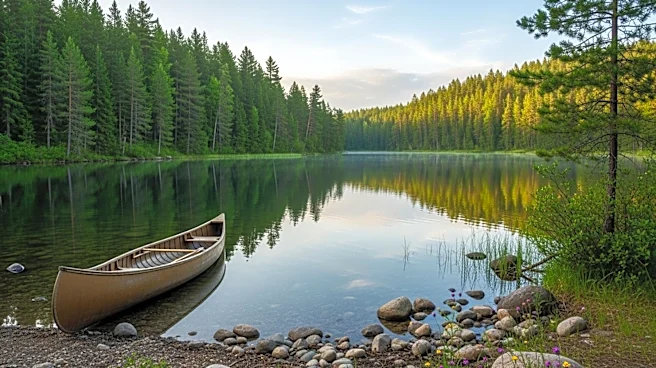
President Trump has signed a Congressional Review Act Resolution that overturns a 20-year ban on sulfide mining in the Superior National Forest, Minnesota. This area includes the headwaters of the Boundary Waters Canoe Area Wilderness, one of the most
visited wilderness areas in the United States. The decision allows for toxic sulfide mining, which has raised significant environmental concerns. The Congressional Review Act (CRA) typically allows Congress to disapprove of administrative rules, but no previous administration has considered mineral withdrawals as 'rules' subject to the CRA. The Sierra Club, a prominent environmental organization, has criticized the decision, arguing that it prioritizes corporate interests over environmental protection and public health.
Why It's Important?
The decision to allow mining in the Superior National Forest has significant implications for environmental policy and conservation efforts in the United States. The Boundary Waters Canoe Area Wilderness is a critical natural resource, known for its pristine waters and diverse ecosystems. Allowing sulfide mining in this area could lead to toxic pollution, threatening wildlife and the natural beauty of the region. This move reflects a broader trend under the Trump administration to prioritize industrial development over environmental conservation. The decision could set a precedent for future actions regarding protected lands and may influence public policy debates on balancing economic development with environmental stewardship.
What's Next?
The approval of mining in the Superior National Forest is likely to face legal challenges from environmental groups such as the Sierra Club. These organizations may seek to block the mining operations through litigation, arguing that the decision violates environmental protection laws. Additionally, there may be increased public pressure on lawmakers to reconsider the decision, especially from communities that rely on the Boundary Waters for tourism and recreation. The outcome of these legal and public advocacy efforts could influence future policy decisions regarding the management of public lands and natural resources.
Beyond the Headlines
The decision to allow mining in the Superior National Forest highlights the ongoing tension between economic development and environmental conservation. It raises ethical questions about the responsibility of government leaders to protect natural resources for future generations. The potential environmental impact of sulfide mining, including water contamination and habitat destruction, underscores the need for comprehensive environmental assessments and public input in decision-making processes. This development may also prompt a reevaluation of the role of the Congressional Review Act in environmental policy, as it has been used to overturn protections that have long been in place.