


What's Happening?
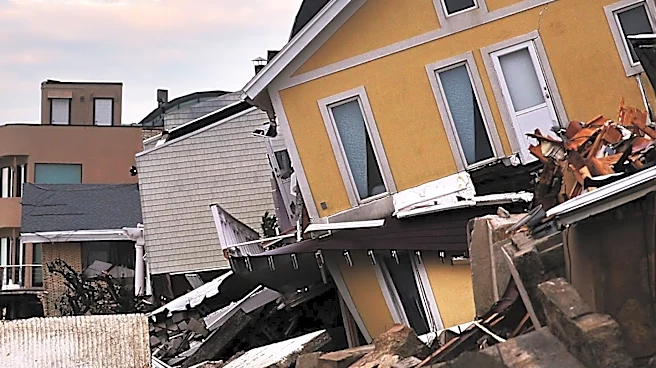
Demolition has commenced on homes in Rock Valley, Iowa, that were purchased through the Federal Emergency Management Agency (FEMA) buyout program following the 2024 flood. Mayor Kevin Van Otterloo confirmed the start of the demolition, marking a significant
step after years of approvals and paperwork. FEMA committed $22 million through its Hazard Mitigation Grant Program to acquire homes located in the 100-year floodplain. More than 500 homes in Rock Valley were damaged by the flood, and 131 are being permanently removed from the housing stock through this program. The city plans to continue buying six homes per week as federal funds become available, aiming to complete the process for all 131 approved properties. The properties where homes are demolished cannot be rebuilt and will be converted into green spaces with natural grasses and trails, a plan developed in collaboration with Dordt University.
Why It's Important?
This initiative is crucial for Rock Valley's long-term resilience against future flooding and serves as a model for other flood-prone communities. By removing homes from high-risk areas and converting the land into green space, the city is reducing its vulnerability to natural disasters, protecting residents, and potentially lowering future disaster relief costs. The permanent removal of 131 homes from the housing stock, while difficult for affected residents, is a strategic move to prevent repeated damage and displacement. The creation of green spaces also offers environmental benefits, such as improved water absorption and recreational opportunities. The successful implementation of this FEMA-funded program demonstrates the importance of federal-local partnerships in disaster recovery and mitigation efforts, providing a blueprint for how communities can adapt to the increasing challenges posed by extreme weather events.
What's Next?
The demolition process will continue, with the city aiming to acquire and demolish six homes per week until all 131 approved properties are cleared. Following demolition, the focus will shift to transforming these lots into green spaces, including planting natural grasses and developing trails, as outlined in the plan with Dordt University. The city will also continue its efforts to address housing needs by supporting new construction in less vulnerable areas, such as the south and east of town, where available lots have been filled and new homes and apartments are being built. Other communities, like Spencer and Cherokee, which have also received federal funds for similar buyback programs, will likely observe Rock Valley's progress as they advance their own mitigation efforts. The ongoing success of these programs will depend on sustained federal funding and efficient local administration.
Beyond the Headlines
The Rock Valley buyout program highlights the broader societal challenge of adapting to climate change and increasing natural disaster frequency. While providing immediate relief and long-term safety for residents, the process of relocating and demolishing homes carries significant emotional and social costs for those who have lived in these areas for decades. It underscores the difficult decisions communities face in balancing historical ties and property rights with the imperative of public safety and environmental sustainability. The conversion of residential areas into green spaces also represents a shift in land use philosophy, prioritizing ecological functions and community resilience over traditional development. This case also brings to light the complex bureaucratic processes involved in federal disaster aid, with years of approvals and paperwork often preceding tangible recovery efforts, emphasizing the need for streamlined procedures in future disaster responses.