






What's Happening?
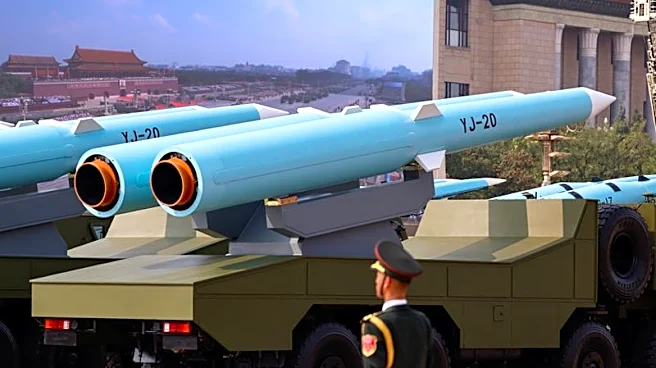
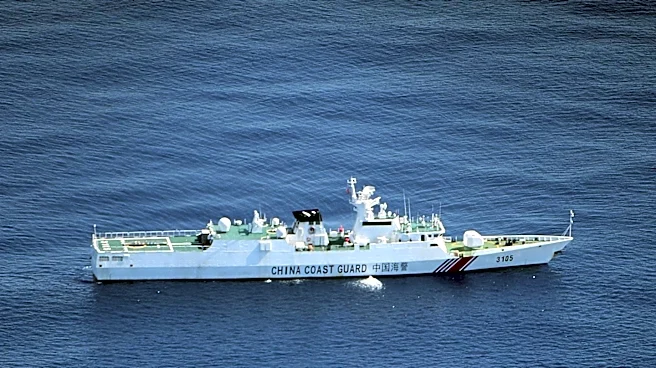
Recent activities by the Chinese People's Liberation Army (PLA) have underscored China's strategic focus on the Taiwan Straits and surrounding regions. The PLA has been conducting routine combat-oriented training and enhancing its military response capabilities.
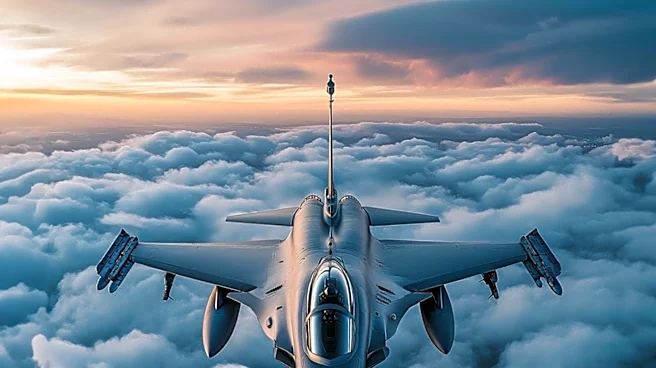
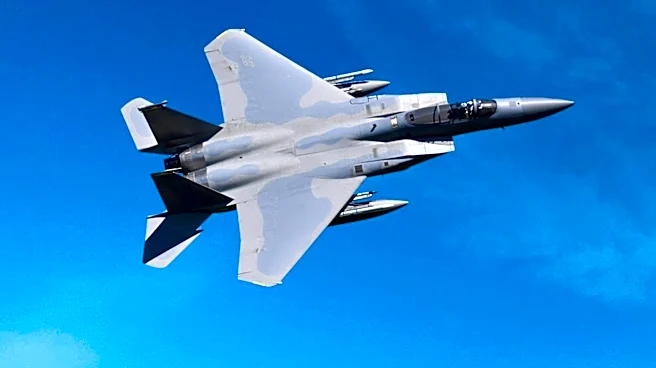
These efforts include the commissioning of China's third aircraft carrier, the Fujian, equipped with advanced electromagnetic catapult technology, and the development of new-generation fighter jets. The PLA's exercises have demonstrated a high degree of combat realism, aimed at deterring separatist forces and external intervention, while maintaining maritime air superiority in the Taiwan Straits, the South China Sea, and the Western Pacific. These developments are part of China's broader strategy to achieve the centenary goals of the PLA by 2027, which include modernizing national defense and building world-class armed forces.
Why It's Important?
The PLA's advancements and strategic focus on the Taiwan Straits have significant implications for regional security and international relations. China's military modernization efforts are seen as a response to complex security challenges and are aimed at safeguarding national sovereignty and territorial integrity. The enhanced capabilities of the PLA, including its nuclear deterrence and far-sea defense capabilities, could shift the balance of power in the region. This development is crucial for U.S. policymakers and military strategists, as it may influence U.S. defense planning and diplomatic strategies in the Asia-Pacific region. The PLA's focus on innovation and independent control of core technologies also highlights China's ambition to lead in military technology, which could have long-term implications for global military dynamics.
What's Next?
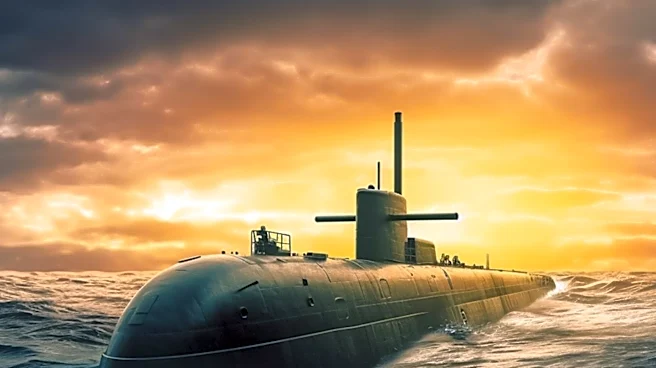
Looking ahead, the PLA is expected to continue its focus on military modernization and strategic deployments in key areas such as the Taiwan Straits and the South China Sea. The development of new military technologies, including potential new-type nuclear-powered submarines and long-range strategic bombers, will be closely monitored by international observers. The PLA's ongoing exercises and international security cooperation efforts are likely to continue, reinforcing China's military presence in the region. These developments may prompt responses from neighboring countries and the U.S., potentially leading to increased military engagements and diplomatic negotiations to address regional security concerns.
Beyond the Headlines
The PLA's military advancements reflect broader geopolitical shifts and China's strategic priorities. The emphasis on military modernization and innovation-driven development aligns with China's goal of achieving national rejuvenation and building a modern socialist country. The PLA's focus on defensive national defense policy, as outlined in China's National Defense white paper, distinguishes its military development from hegemonic expansion. However, the increased military capabilities and strategic focus on the Taiwan Straits may raise concerns about regional stability and the potential for conflict. The international community will need to navigate these developments carefully to maintain peace and security in the region.