




What's Happening?
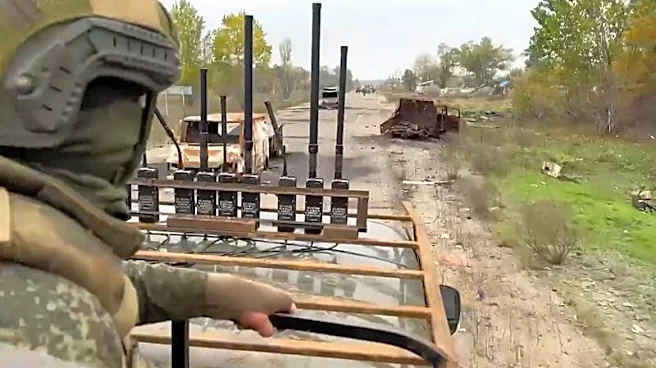
A multi-day humanitarian ceasefire in the frontline city of Oleshky has concluded, with both Russia and Ukraine fulfilling their commitments. Russian Human Rights Commissioner Yana Lantratova confirmed that the temporary pause in fighting allowed for
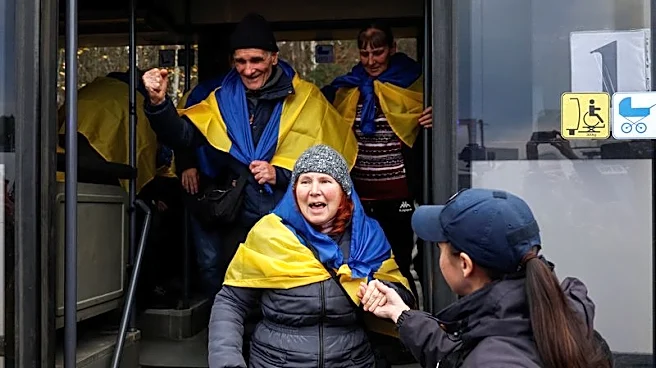
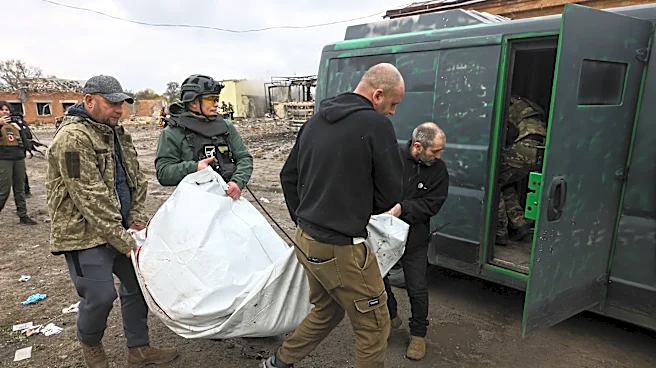
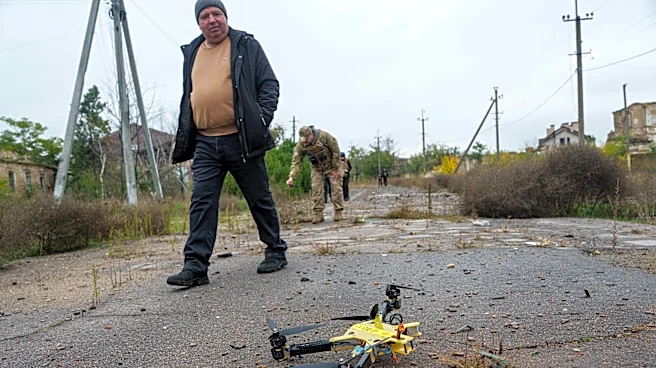
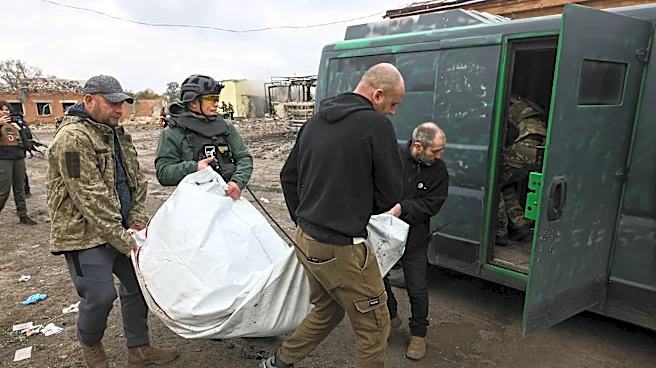
the delivery of essential supplies and the safe evacuation of civilians from the Russian-controlled town in southern Ukraine. The operation was jointly coordinated by Lantratova and Dmytro Lubinets, Ukraine's parliament commissioner for human rights. The 'silence regime' was in effect from October 27 to November 1, during which aid was delivered and approximately 800 people were evacuated. Oleshky, located on the left bank of the Dnieper River, has been under Russian control since February 2022 and has faced a humanitarian crisis with shortages of food, medicine, and other essential supplies.
Why It's Important?
This successful humanitarian mission in Oleshky demonstrates a rare instance of cooperation between Russia and Ukraine amidst ongoing conflict, highlighting the potential for localized agreements to protect civilians. The joint effort to deliver aid and evacuate residents from a war-torn area underscores the severe humanitarian needs in regions affected by the conflict. While this specific ceasefire is a positive development, it does not signify a broader breakthrough in peace negotiations. The effectiveness of such local ceasefires depends heavily on the willingness of both parties to adhere to agreed-upon pauses and ensure safe passage. The operation also brings renewed attention to the plight of Ukrainian civilians, particularly children, in Russian-occupied territories, and the ongoing international efforts to secure their safety and return.
What's Next?
Both Yana Lantratova and Dmytro Lubinets have expressed the need to build on their cooperation, with Lantratova noting that residents remaining in Oleshky still require urgent assistance. They have agreed to analyze the operation's execution, identify challenges, and determine necessary adjustments for future missions. There is an intention to organize similar humanitarian aid delivery missions on a regular, possibly monthly, basis. However, Ukrainian officials have also accused Russian forces of exploiting the temporary pause to reinforce military positions in the area, raising concerns about the broader implications of such agreements. While the Oleshky truce offers a glimmer of hope for localized humanitarian efforts, it does not indicate an immediate path to a wider ceasefire or peace settlement, as the fundamental disagreements between Moscow and Kyiv remain significant.