





What's Happening?
Kurdish security forces have apprehended 22 suspected members of the Islamic State (ISIS), including a senior religious leader, during a significant security operation in Sulaymaniyah province, Kurdistan Region of Iraq. The Kurdistan Region Security Agency
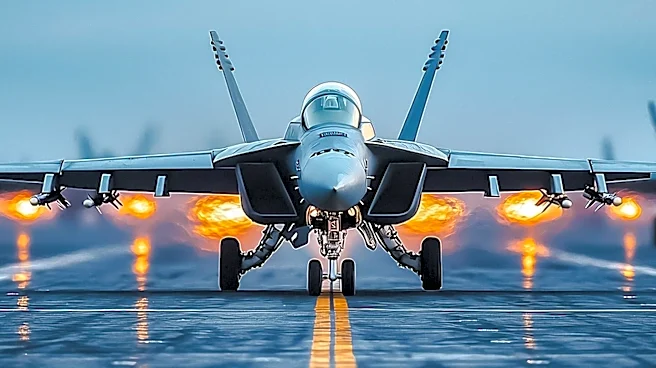
reported that the arrests were conducted over four days by the General Directorate of Asayish Operations, in collaboration with security forces in Sulaymaniyah and Halabja provinces. The operation targeted two armed ISIS cells and several suspected clandestine members. Authorities seized heavy, medium, and light weapons, hand grenades, military binoculars, and ammunition. The suspects were allegedly planning multiple attacks in mid-September. An ISIS 'sharia emir' was arrested in Khurmal, southeast of Sulaymaniyah city, following an armed confrontation, though no casualties were reported. All 22 detainees are Kurdish, and investigations are ongoing, with evidence and confessions expected to be made public later. Separately, Iraqi F-16 fighter jets destroyed an ISIS hideout in the Narin area of Diyala province, with no immediate reports of casualties.
Why It's Important?
This operation is important as it highlights the ongoing efforts to counter ISIS's resurgence and its reliance on sleeper cells and insurgent attacks, particularly in disputed areas between Baghdad and Erbil. The territorial defeat of ISIS in 2017 did not eliminate the group entirely, and its continued attempts to plan and execute attacks pose a significant threat to regional stability and security. The arrest of a senior religious leader suggests a disruption to the group's command and ideological structure, which could hinder its recruitment and operational capabilities. The seizure of a substantial cache of weapons indicates the serious intent and potential for violence by these cells. For the U.S. and its allies, who have invested heavily in counter-terrorism efforts in Iraq, these arrests underscore the persistent nature of the threat and the necessity of continued vigilance and support for local security forces. The incident also reflects the complex security landscape in Iraq, where various actors, including Kurdish forces and the Iraqi military, are working to prevent the re-establishment of ISIS's influence.
What's Next?
Investigations into the 22 suspected ISIS members are ongoing, and authorities plan to release evidence and confessions publicly at a later stage. This could lead to further arrests and provide valuable intelligence on ISIS's networks and future plans. The Iraqi government and Kurdish security forces will likely continue their coordinated efforts to dismantle remaining ISIS cells and prevent future attacks. The incident may also prompt increased scrutiny and security measures in vulnerable areas, particularly those disputed between Baghdad and Erbil, where ISIS tends to exploit security gaps. The U.S. and international partners will likely continue to provide intelligence, training, and logistical support to Iraqi and Kurdish forces to bolster their counter-terrorism capabilities. The ongoing threat from ISIS sleeper cells means that sustained pressure and proactive operations will be crucial to maintaining security and preventing the group from regaining strength.
Beyond the Headlines
The continued activity of ISIS, even after its territorial defeat, points to a deeper challenge beyond military operations: the ideological appeal and underlying socio-economic conditions that allow such groups to persist. The fact that all 22 detainees are Kurdish suggests that ISIS continues to draw recruits from diverse ethnic and social backgrounds, indicating that its influence is not confined to specific demographics. This highlights the need for comprehensive strategies that include not only security measures but also efforts to counter extremist narratives and address grievances that might make individuals susceptible to radicalization. The ongoing struggle against ISIS also has broader implications for regional stability, as the group's activities can exacerbate existing political tensions and conflicts. The incident underscores the complex interplay of local, regional, and international dynamics in the fight against terrorism, where military successes must be complemented by long-term solutions to prevent the resurgence of extremist ideologies.