





What's Happening?
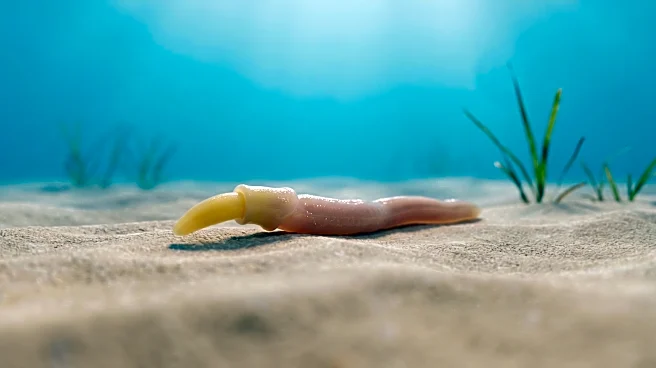
A recent study led by Stanford University researchers has uncovered that the metamorphosis of the acorn worm, *Schizocardium californicum*, involves extensive cellular reprogramming. Unlike previous theories suggesting cell death and replacement or cells
maintaining their original function, this research indicates that most larval cells are reprogrammed to take on new roles in the adult organism. For instance, larval neurons were found to become more similar to larval gut cells than to adult neurons. This phenomenon, where cells drastically change their function during normal development, was observed in over half of the cells analyzed. The study, published in *Nature Communications*, utilized single-cell RNA sequencing on over 87,000 cells from five developmental stages of the acorn worm, categorizing them into 12 classes. Researchers also used a persistent dye to track larval cells, confirming their persistence into adulthood despite significant functional changes. This finding challenges the long-held belief that cellular reprogramming primarily occurs after injury or in species with regenerative capabilities, rather than as a standard feature of normal development.
Why It's Important?
This discovery holds significant implications for developmental biology and evolutionary understanding, particularly in the context of U.S. scientific research. The acorn worm, belonging to the phylum Hemichordata, is considered an evolutionary link to vertebrate animals, including mammals. Therefore, understanding its cellular reprogramming during metamorphosis could offer new insights into the fundamental processes of development in a broader range of species, potentially including humans. The study's findings suggest that cellular reprogramming might be a more common developmental feature than previously thought, expanding the scope of how scientists view cellular plasticity and differentiation. This could influence future research directions in regenerative medicine, stem cell biology, and the study of developmental disorders. Furthermore, by focusing on 'non-model' organisms, the Stanford team is addressing a significant gap in scientific knowledge, as most research has historically concentrated on direct developers like mice and zebrafish. This broader approach could lead to a more comprehensive understanding of animal development and evolution.
What's Next?
The findings from this Stanford-led study are likely to stimulate further research into cellular reprogramming during metamorphosis in other species, particularly those considered evolutionary links to vertebrates. Scientists may investigate whether similar extensive reprogramming occurs in other indirect developers and explore the molecular mechanisms driving these cellular transformations. The study's lead author, Christopher Lowe, suggests that examining more animals undergoing metamorphosis could reveal that reprogramming is a much more common developmental feature. This could lead to the development of new experimental models and techniques to study cellular plasticity. Additionally, the insights gained from this research could inform studies on how cells respond to injury or disease, potentially opening new avenues for therapeutic interventions. The focus on non-model organisms will likely continue, encouraging researchers to explore the diverse developmental strategies across the animal kingdom to gain a more complete picture of biological processes.
Beyond the Headlines
The profound implications of this research extend beyond immediate biological understanding, touching upon the very definition of cellular identity and developmental pathways. The discovery that cells can undergo such radical functional shifts during normal development challenges the traditional view of cellular specialization as a largely irreversible process. This could lead to a re-evaluation of how developmental biologists conceptualize cell fate and differentiation. Ethically, understanding such deep cellular plasticity might raise questions about manipulating developmental processes, though this is a distant prospect. Culturally, this research underscores the value of studying biodiversity and 'non-model' organisms, highlighting that significant scientific breakthroughs can come from unexpected corners of the natural world. It reinforces the idea that nature's complexity often surpasses our current scientific paradigms, pushing the boundaries of what is considered possible in biological systems. The study also emphasizes the importance of interdisciplinary approaches in science, combining genetic analysis with observational biology to unravel complex biological phenomena.