









What's Happening?
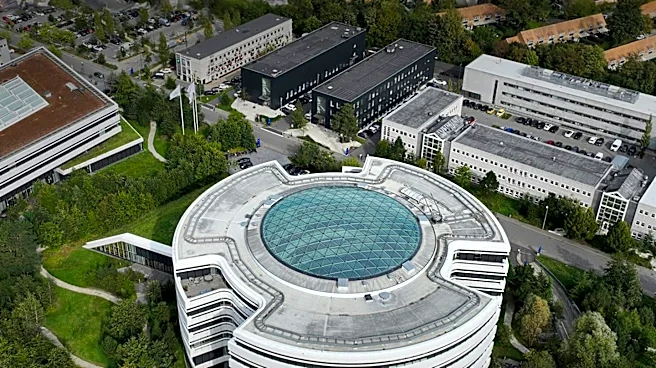
Congressman Glenn Ivey, alongside Maryland Lieutenant Governor Aruna Miller, recently visited the Quantum Research Center located in Maryland’s Discovery District. The visit aimed to showcase the ongoing work at the center and emphasize Maryland's commitment
to fostering a world-class quantum ecosystem. The Quantum Research Center is designed to bring together researchers, students, partners, and innovators to accelerate advancements in quantum computing. This initiative underscores a collaborative effort to push the boundaries of this emerging technology. The presence of key political figures like Congressman Ivey and Lt. Governor Miller highlights the state's dedication to supporting and investing in the quantum computing sector, positioning Maryland as a significant hub for quantum innovation and development. The center's focus is not just on its physical facilities but on creating an environment conducive to rapid technological progress through collaboration.
Why It's Important?
The visit by Congressman Glenn Ivey to the Quantum Research Center is important because it signals strong governmental support for the development of quantum computing within the U.S. This commitment can lead to increased funding, policy initiatives, and educational programs that will benefit the national technology sector. Maryland's ambition to build a 'world-class quantum ecosystem' could attract significant investment and talent, creating high-tech jobs and fostering innovation that has broader implications for national security, economic competitiveness, and scientific research. For U.S. industries, particularly in technology and defense, a robust domestic quantum computing capability is crucial for maintaining a competitive edge globally. The collaboration between government, academia, and industry, as exemplified by this center, is vital for translating cutting-edge research into practical applications, potentially leading to breakthroughs in fields like medicine, materials science, and artificial intelligence. This initiative also positions the U.S. to lead in a technology that is expected to redefine numerous sectors.
What's Next?
Following the visit, it is anticipated that Maryland will continue to strengthen its quantum computing initiatives, potentially through further legislative support, increased state funding, and partnerships with private sector companies. The emphasis on bringing together researchers, students, and innovators suggests a focus on workforce development and talent retention within the state. We can expect to see more collaborations between academic institutions, government agencies, and technology firms to expand the capabilities and reach of the Quantum Research Center. This could include new research projects, educational programs to train the next generation of quantum scientists and engineers, and efforts to attract more quantum technology companies to the Discovery District. The continued engagement of political leaders like Congressman Ivey and Lt. Governor Miller indicates a sustained commitment to making Maryland a leader in the quantum computing space, which may translate into future policy decisions aimed at accelerating this growth.
Beyond the Headlines
Beyond the immediate implications of technological advancement, Maryland's investment in a quantum ecosystem, championed by figures like Congressman Ivey, reflects a broader strategic vision for the U.S. to secure its leadership in critical emerging technologies. Quantum computing is not merely an incremental improvement; it represents a paradigm shift with the potential to disrupt existing industries and create entirely new ones. The ethical and societal implications of such powerful computing capabilities are profound, ranging from enhanced cybersecurity to the potential for new forms of surveillance. By fostering a collaborative environment, Maryland is not only aiming for technological superiority but also implicitly addressing the need for responsible development and governance of quantum technologies. This proactive approach could set a precedent for how other states and the nation as a whole approach the development of advanced technologies, ensuring that innovation is balanced with societal well-being and ethical considerations. The long-term shift could see the U.S. solidify its position as a global leader in quantum science and technology, influencing international standards and collaborations.