

What's Happening?
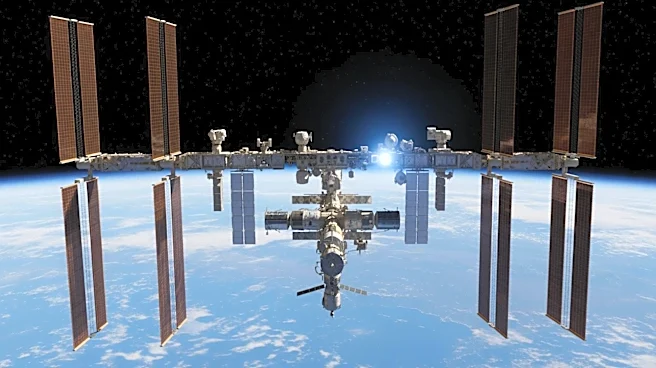
NASA issued and then reversed an evacuation alert for astronauts aboard the International Space Station (ISS) due to a worsening air leak. The alert was initially triggered when the air leak rate increased from one pound per day to two pounds. Five astronauts,
including members of NASA's Crew-12 mission and another U.S. astronaut, were instructed to take shelter in the SpaceX Crew Dragon spacecraft. The alert was lifted after approximately two hours when NASA and Roscosmos, the Russian space agency, assessed the situation. Roscosmos identified two leaks on the ISS, with the first being sealed and efforts underway to address the second. The ISS currently hosts seven astronauts from two missions, including NASA astronauts Jessica Meir and Jack Hathaway, European Space Agency astronaut Sophie Adenot, and Roscosmos cosmonaut Andrey Fedyaev.
Why It's Important?
The incident underscores the ongoing challenges of maintaining the ISS, a critical platform for international space collaboration. The air leaks, while not immediately threatening, highlight the aging infrastructure of the ISS and the need for continuous maintenance and international cooperation. The situation also emphasizes the importance of having contingency plans, such as evacuation protocols, to ensure astronaut safety. The ISS serves as a symbol of international cooperation in space exploration, and its maintenance is crucial for ongoing scientific research and technological advancements. The event may influence legislative discussions in the U.S. regarding the extension of the ISS's operational life, which is currently under consideration in Congress.
What's Next?
NASA and Roscosmos will continue to collaborate on addressing the air leaks and ensuring the safety of the ISS and its crew. The incident may prompt further discussions on the future of the ISS, including potential extensions of its operational life and the development of replacement platforms. Legislative efforts in the U.S. Congress, supported by Senators Ted Cruz and Maria Cantwell, aim to extend the ISS's life until 2032. This extension would provide more time for the development of new space infrastructure and maintain the U.S.'s competitive edge in space exploration against other nations, particularly China.