








What's Happening?
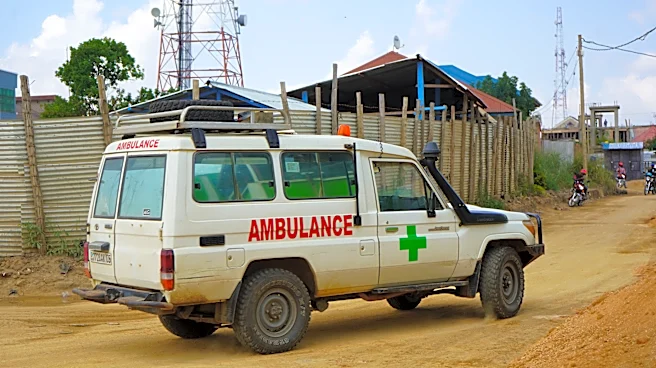
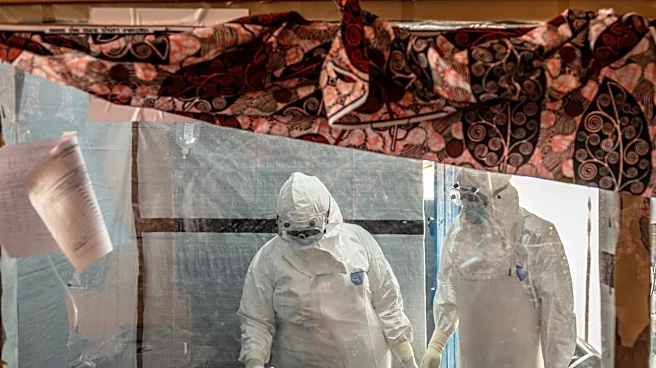
The Ebola outbreak in Congo has resulted in at least 930 deaths, according to the country's Ministry of Health. The outbreak, which began in eastern Congo on May 15, is the fastest-growing on record, with 2,344 confirmed cases. The Bundibugyo virus, responsible
for the outbreak, is less common and lacks an approved vaccine or treatment. The situation is exacerbated by safety concerns and health worker strikes over payment issues, particularly in the worst-affected province of Ituri. The World Health Organization has expressed concern over the rapid spread of the virus, with 80% of new cases emerging from unknown transmission chains.
Why It's Important?
The outbreak poses a significant public health challenge, not only for Congo but for the international community. The rapid spread of the virus and the lack of effective treatment options highlight the urgent need for global health interventions. The situation is further complicated by the strikes of health workers, which could hinder response efforts. The outbreak underscores the importance of strengthening health systems and ensuring adequate support for healthcare workers, who are crucial in managing such crises.
What's Next?
Efforts to contain the outbreak will require increased international support and resources. The Congolese government, along with international health organizations, will need to address the safety and payment concerns of health workers to ensure their continued participation in response efforts. Monitoring and controlling the spread of the virus will be critical, as will the development of effective treatments and vaccines. The situation may also prompt discussions on improving healthcare infrastructure in regions prone to such outbreaks.
Beyond the Headlines
The outbreak raises ethical questions about the global response to health crises in developing countries. It highlights the disparities in healthcare access and the need for equitable distribution of medical resources. The situation may also lead to a reevaluation of how international aid is allocated and the importance of investing in preventive measures to avoid future outbreaks.