
What's Happening?
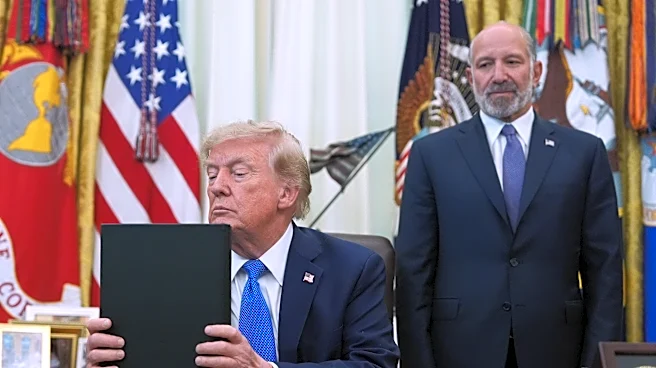
On September 4, 2026, President Trump signed two Executive Orders aimed at supporting American ranchers. These orders include directives for the U.S. Department of Agriculture (USDA) and the Department of the Interior.
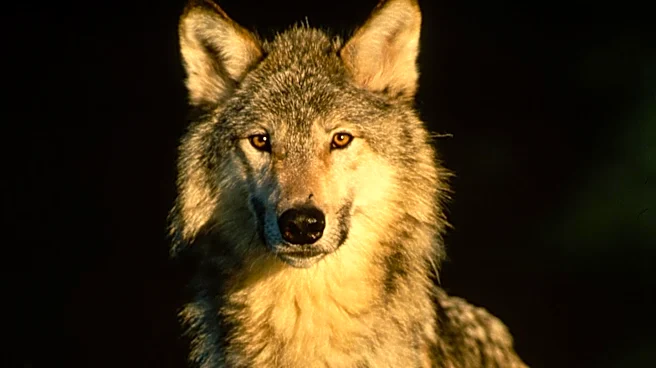
Key actions include a review of mandatory country-of-origin labeling for beef products, a directive to the Secretary of the Interior to assess delisting gray wolves and Mexican wolves under the Endangered Species Act (ESA), and measures to strengthen competition in livestock markets. The administration also announced additional initiatives under the 'Ranchers First Initiative,' such as increasing grazing lands in the Conservation Reserve Program (CRP) and expanding remote grading programs for beef. These actions are presented as part of the Trump administration's efforts to rebuild the American cattle herd and provide transparency for consumers, contrasting with previous administrations' approaches.
Why It's Important?
These executive orders carry significant implications for the U.S. agricultural sector, particularly for cattle ranchers and consumers. The review of mandatory country-of-origin labeling for beef could lead to increased transparency for consumers regarding where their beef originates, potentially influencing purchasing decisions and supporting domestic producers. For ranchers, the potential delisting of gray and Mexican wolves from the ESA could reduce livestock losses due to predation, a long-standing concern for the industry. Furthermore, efforts to strengthen packer competition and expand market access for small and regional meat producers aim to address market concentration issues, potentially leading to fairer prices for ranchers. These measures collectively seek to bolster the economic viability of American ranching and ensure a more competitive and transparent beef supply chain.
What's Next?
The executive orders set several deadlines for various agencies. The Secretary of Agriculture, in consultation with the United States Trade Representative, has 90 days to review authorities related to mandatory country-of-origin labeling for beef products and produce an economic analysis. Similarly, the Secretary of the Interior is directed to determine within 90 days whether gray wolves or Mexican wolves meet the criteria for delisting or downlisting under the ESA. USDA is also tasked with prioritizing investigations into potential violations of the Packers and Stockyards Act and reporting on enforcement actions within 60 days. These reports and reviews will inform potential new regulations or legislative recommendations, indicating that further policy changes related to beef labeling, wildlife management, and market competition are likely to be considered in the coming months.
Beyond the Headlines
The executive orders touch upon several deeper issues beyond immediate economic impacts. The debate over country-of-origin labeling for beef reflects broader consumer demands for transparency and traceability in the food supply chain, as well as ongoing tensions between domestic producers and international trade agreements. The delisting of wolves from the ESA highlights the complex and often contentious balance between wildlife conservation and agricultural interests, with potential ecological consequences and legal challenges from environmental groups. Moreover, the focus on strengthening competition in the livestock market underscores persistent concerns about antitrust issues and the power dynamics within the meatpacking industry. These actions could trigger long-term shifts in agricultural policy, environmental protection, and consumer advocacy, shaping the future of food production and land management in the U.S.