







What's Happening?
National Grid is encountering significant opposition in New York over its proposed 'rate stabilization' plan, which critics, including Earthjustice and Alliance for a Green Economy (AGREE), argue is a disguised rate hike. The plan seeks to maintain current
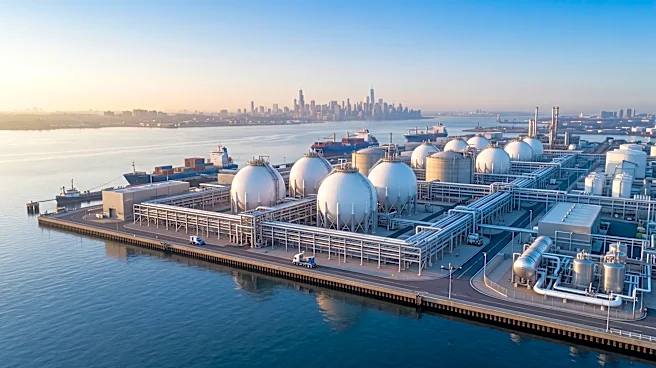
gas rates, which opponents contend are artificially high, and would allow National Grid to invest over a billion dollars in expanding and reinforcing its gas system. This investment would ultimately be passed on to customers through higher utility bills starting in 2028. According to Hillary Aidun, Senior Attorney at Earthjustice, National Grid is attempting to bypass the standard regulatory process for setting rates, which typically involves public review and often results in lower costs for consumers. Jessica Azulay, Executive Director of AGREE, stated that the proposal fails to provide meaningful relief for New Yorkers struggling with energy bills and locks in higher spending on fossil fuel infrastructure. The plan also includes approximately $1.7 billion in near-term gas infrastructure spending, with costs appearing on customer bills from 2028, including over $60 million to upgrade a liquefied natural gas facility in Greenpoint, Brooklyn.
Why It's Important?
This proposal is significant for New York's energy consumers and its climate goals. If approved, it could lead to sustained high energy bills for nearly two million gas customers, particularly impacting the 1.3 million New Yorkers already struggling to pay their gas and electric bills, as highlighted by a 2026 AARP study. The plan's focus on expanding and reinforcing gas infrastructure directly conflicts with New York's established climate mandates, which aim to reduce greenhouse gas emissions and transition towards renewable energy sources. By investing heavily in fossil fuel infrastructure, National Grid's proposal could deepen the state's dependence on natural gas, potentially hindering the transition to cleaner energy and making it more challenging to meet long-term climate objectives. Furthermore, bypassing the normal rate-setting process could set a precedent that reduces public oversight and consumer advocacy in future utility decisions, potentially leading to less transparent and less accountable utility spending.
What's Next?
The New York State Public Service Commission (PSC) is expected to scrutinize National Grid's proposal. Earthjustice has submitted comments to the PSC on behalf of AGREE, urging the commission to reject the plan. Hundreds of New Yorkers have also voiced concerns, indicating strong public opposition. The PSC's decision will determine whether National Grid can proceed with its 'rate stabilization' plan without undergoing the typical formal rate case process. If the PSC approves the plan, customers in New York City and Long Island could see continued high utility bills and face even higher costs starting in 2028. Conversely, if the PSC rejects the proposal, National Grid may be compelled to undergo a formal rate case, which would allow for greater public input and potentially lead to lower utility spending and costs for customers, or choose to 'stay out,' resulting in lower rates from April 2027.
Beyond the Headlines
The debate surrounding National Grid's proposal extends beyond immediate rate impacts, touching upon fundamental questions of energy policy, environmental justice, and regulatory transparency in New York. The plan's emphasis on fossil fuel infrastructure raises ethical concerns about the state's commitment to climate action and its responsibility to future generations. By potentially locking in higher spending on gas systems, the proposal could exacerbate energy affordability issues for vulnerable communities and disproportionately affect low-income households. Moreover, the attempt to circumvent the standard public review process highlights a broader tension between utility companies' financial interests and the public's right to scrutinize and influence decisions that affect essential services and environmental health. This situation underscores the ongoing challenge of balancing energy reliability, affordability, and sustainability in a rapidly changing climate landscape.