





What's Happening?
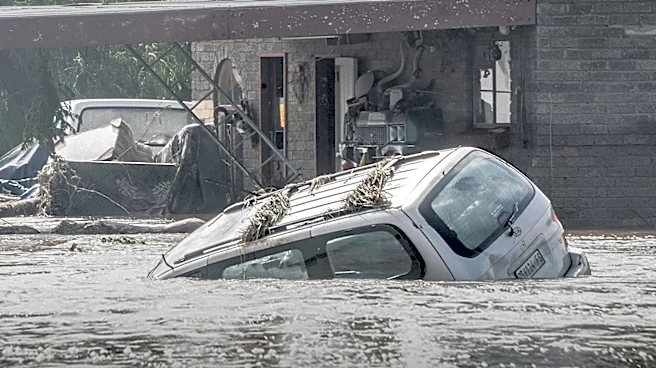
The New Haven Fire Department successfully rescued 16 people during flash floods on September 13. Among those rescued were five individuals from a CTtransit bus that became stranded on Temple Street. Firefighters carried these passengers through high
water to a dry area approximately 15 feet away. Additionally, three more people were rescued from vehicles near the bus. The flooding was a result of torrential rain, with rainfall totals ranging from 3 to 4.5 inches in a three-hour period, which City Engineer Giovanni Zinn described as a 20- to 100-year rain event. The New Haven Fire Department responded to a total of nine flood-related incidents across the city during this period, utilizing small inflatable boats, flotation devices, and wetsuits to navigate various water conditions, including swift currents. Fire Chief Daniel Coughlin emphasized the ongoing danger of flooded roadways and advised drivers against attempting to pass through them.
Why It's Important?
This event highlights the critical role of emergency services in safeguarding public safety during severe weather incidents. The rapid response and effective rescue operations by the New Haven Fire Department prevented potential casualties and mitigated the immediate impact of the flash floods on residents. The incident also underscores the increasing frequency and intensity of extreme weather events, which pose significant challenges to urban infrastructure and emergency preparedness. The warning from Fire Chief Coughlin about the dangers of flooded roadways is crucial for public awareness and safety, as many individuals continue to underestimate the risks. Furthermore, the disruption to public transportation, as evidenced by the stranded CTtransit bus, illustrates how such events can paralyze essential services and daily routines, necessitating robust contingency plans and public education campaigns.
What's Next?
In response to increasingly concentrated heavy-rain situations, the New Haven Fire Department will likely continue to refine its flood rescue protocols and equipment. Public awareness campaigns regarding the dangers of driving through flooded areas are expected to intensify, with Fire Chief Coughlin's direct warning serving as a foundation for future advisories. City Engineer Giovanni Zinn's observation of the rainfall as a 20- to 100-year event suggests that New Haven may need to re-evaluate and potentially upgrade its stormwater management infrastructure to cope with more frequent and severe weather patterns. This could involve investments in drainage systems, flood barriers, and early warning systems. Local authorities will also likely assess the impact on public transportation and develop strategies to ensure the safety of passengers and continuity of service during future flood events.
Beyond the Headlines
The flash floods in New Haven, and the subsequent rescue operations, point to a broader societal challenge related to climate change and urban resilience. The classification of the rainfall as a 20- to 100-year event suggests that what were once considered rare occurrences are becoming more common, necessitating a fundamental shift in urban planning and infrastructure development. The incident also raises questions about the psychological and behavioral aspects of public safety, as many drivers continue to ignore warnings about flooded roadways. This highlights the need for more effective communication strategies and potentially stricter enforcement measures. Long-term implications include the potential for increased insurance costs, property damage, and the displacement of residents, which can disproportionately affect vulnerable communities. The event serves as a stark reminder of the interconnectedness of environmental changes, urban development, and community well-being.