

What's Happening?
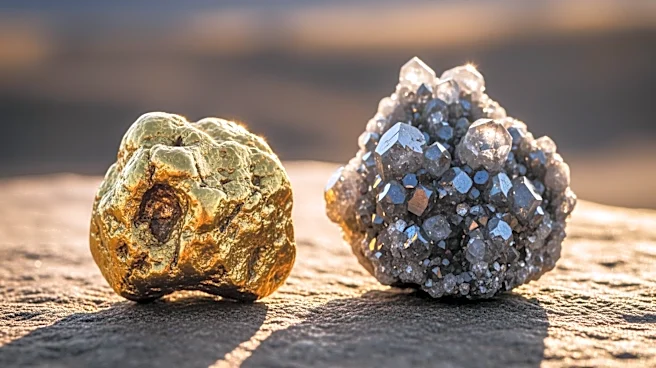
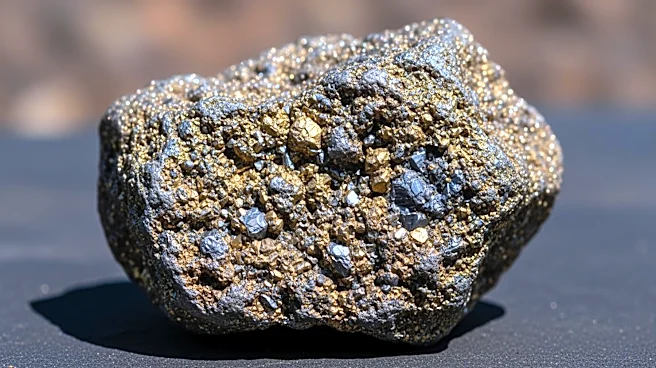
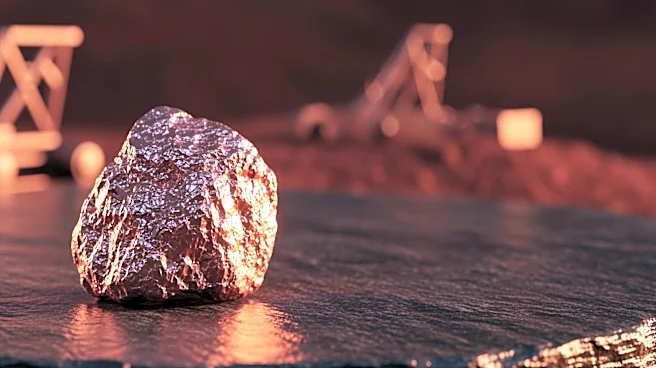
Namibia is positioning itself as a major force in the global supply chain for critical minerals and rare earths. The country, rich in resources such as uranium, lithium, graphite, and rare earth elements, is leveraging these assets to advance its industrialization
and economic development. At a recent European Union-Namibia business forum, Namibia's Minister of Mines and Energy, Modestus Amutse, emphasized the strategic importance of these minerals for technological applications. The country is also forming partnerships with the EU to develop a comprehensive national strategy for critical raw materials, aiming to integrate into global supply chains linked to renewable energy technologies and advanced manufacturing.
Why It's Important?
Namibia's move to capitalize on its mineral wealth is significant for both the country and the global market. As demand for critical minerals increases, driven by the transition to renewable energy and advanced technologies, Namibia's resources could play a crucial role in meeting global needs. The country's strategic partnerships with the EU highlight the potential for international collaboration in securing sustainable supply chains. For Namibia, this initiative represents an opportunity to attract investment, create jobs, and drive economic growth. The development of a national strategy for critical raw materials could also enhance Namibia's position in the global market and contribute to its long-term economic resilience.
What's Next?
Namibia's efforts to integrate into global supply chains will likely involve further exploration and development of its mineral resources. The country may also focus on building infrastructure and capacity to support the extraction and processing of critical minerals. As Namibia strengthens its partnerships with international stakeholders, it could become a key player in the global market for critical minerals. The success of these initiatives will depend on effective policy implementation and the ability to attract long-term investment. Namibia's progress in this area could serve as a model for other resource-rich countries seeking to leverage their mineral wealth for economic development.