




What's Happening?
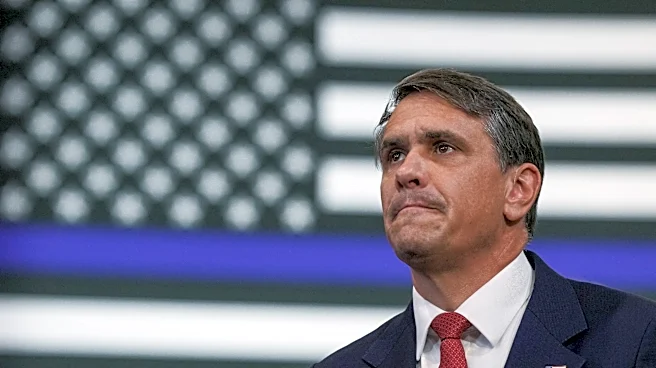
In Virginia's 1st Congressional District, incumbent Republican Congressman Rob Wittman has significantly outraised his Democratic challenger, Shannon Taylor, by a margin of four to one. This substantial financial advantage is largely attributed to strong
support from major defense contractors, including Lockheed Martin and Northrup Grumman. According to Alex Keena at Virginia Commonwealth University, these contributions reflect the defense industry's confidence in Wittman's voting record, particularly his alignment with Republican efforts to increase defense spending. The district is considered a toss-up in the upcoming election, making campaign finances a critical factor, though experts note that fundraising alone does not guarantee victory.
Why It's Important?
The significant financial disparity in the Virginia 1st Congressional District race highlights the influence of special interest groups, particularly defense contractors, in U.S. political campaigns. The substantial contributions from companies like Lockheed Martin and Northrup Grumman to Congressman Wittman's campaign suggest a vested interest in maintaining a representative who supports increased defense spending. This dynamic raises questions about the potential impact of corporate donations on legislative priorities and the allocation of federal funds. While a strong financial backing can provide a candidate with greater resources for campaigning and outreach, experts like Jennifer Victor at George Mason University caution that fundraising dominance no longer guarantees electoral success, indicating a more complex and unpredictable political landscape.
What's Next?
As the election approaches, the financial advantage held by Congressman Wittman will likely enable a more robust campaign, including increased advertising and voter outreach efforts. However, the competitive nature of the district, despite the fundraising gap, suggests that the race will remain closely watched. Challenger Shannon Taylor will need to find alternative strategies to overcome the financial disparity, potentially focusing on grassroots movements or leveraging other forms of media. Political analysts will be observing whether the parties choose to invest further in this race or reallocate resources to other competitive districts. The outcome will provide insights into the evolving relationship between campaign finance, corporate influence, and voter behavior in U.S. congressional elections.
Beyond the Headlines
The financial dynamics of the Virginia 1st Congressional District race reflect a broader national trend where defense industry contributions play a significant role in shaping political landscapes, particularly in districts with a strong military or defense presence. The assertion that defense contractors 'get the votes out of Wittman that they want' points to a perceived quid pro quo, where financial support is exchanged for legislative alignment. This raises ethical considerations about the integrity of the political process and the potential for corporate interests to overshadow public interest. The evolving understanding that money alone doesn't guarantee victory, as noted by Jennifer Victor, suggests a growing voter sophistication or a shift in how campaigns effectively engage with the electorate, moving beyond traditional advertising to more nuanced forms of communication and community engagement.