



What's Happening?
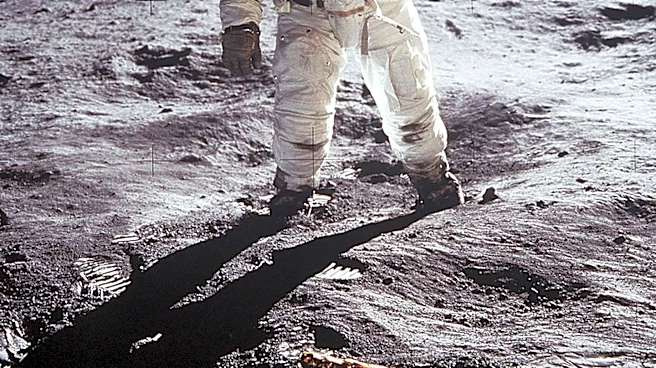
PBS is set to televise 'We Chose to Go to the Moon,' a production that brings the history of the space race to life. This event, originally presented as a concert at Carnegie Hall last April, features Broadway stars, an orchestra, and a combination of film
footage and still photographs. The production offers a radical retelling of the historical events surrounding the space race, aiming to provide a fresh perspective on this significant period. The televised version will allow a broader audience to experience the unique blend of live performance and historical documentation that characterized the original concert. This initiative by PBS highlights a continued effort to present historical narratives through innovative and engaging artistic formats, making complex historical events accessible and compelling for contemporary viewers.
Why It's Important?
The televising of 'We Chose to Go to the Moon' is important as it democratizes access to a significant cultural and historical event that was initially limited to a live audience at Carnegie Hall. By bringing this production to a national television audience, PBS is enabling a wider public to engage with a pivotal moment in U.S. history—the space race—through an artistic lens. This approach can foster a deeper understanding and appreciation of the scientific, political, and human endeavors involved in the race to the moon. Furthermore, it underscores the role of public broadcasting in delivering high-quality educational and cultural content, potentially inspiring new generations to explore history and STEM fields. The use of Broadway stars and an orchestra also elevates the production, making it an attractive and memorable educational experience.
What's Next?
Following its television broadcast, 'We Chose to Go to the Moon' could potentially see increased interest in its unique approach to historical storytelling. This might lead to discussions about the effectiveness of combining performing arts with historical documentation as an educational tool. There could be a surge in demand for similar productions that blend entertainment with historical narratives, encouraging other cultural institutions and broadcasters to explore such formats. Additionally, the broadcast might spark renewed public interest in the history of space exploration and its broader implications, potentially influencing educational curricula or public discourse on scientific achievement and national ambition. The success of this broadcast could also pave the way for future collaborations between performing arts venues and public television networks.
Beyond the Headlines
The production 'We Chose to Go to the Moon' transcends a simple historical recounting by offering a 'radical retelling' of the space race. This suggests a deeper exploration of the narratives, perhaps challenging conventional perspectives or highlighting lesser-known aspects of the era. Such a reinterpretation can provoke critical thinking about how history is constructed and presented, encouraging audiences to question established narratives. Ethically, it raises questions about the responsibility of artists and historians in shaping public understanding of the past. Culturally, it reinforces the power of the arts—music, theater, and visual media—to serve as potent vehicles for historical education and emotional engagement, demonstrating how artistic expression can illuminate complex historical truths and foster a more nuanced understanding of national identity and scientific progress.