







What's Happening?
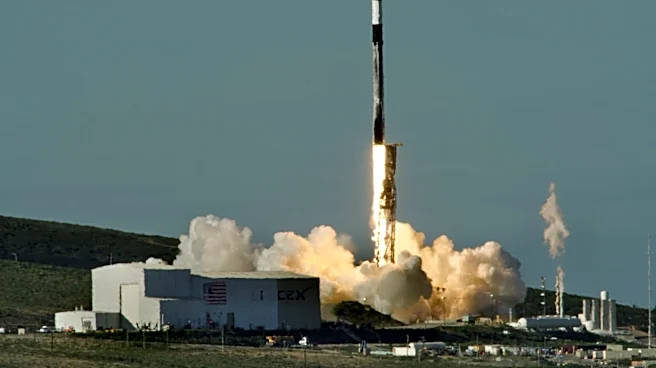
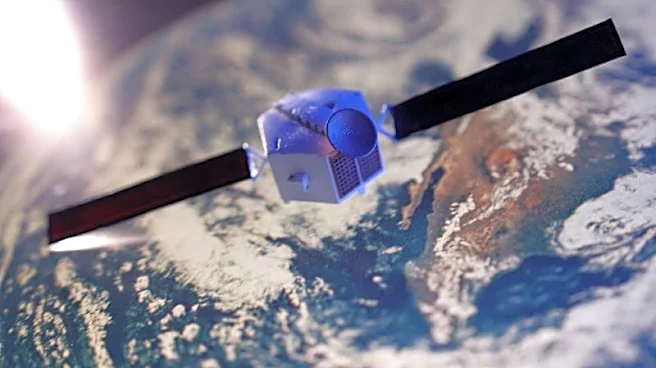
Chinese space startup LandSpace has successfully landed a first-stage rocket booster on land, marking a significant milestone as the first Chinese company to achieve this feat. The landing occurred after a Zhuque-3 rocket launched a satellite into orbit.
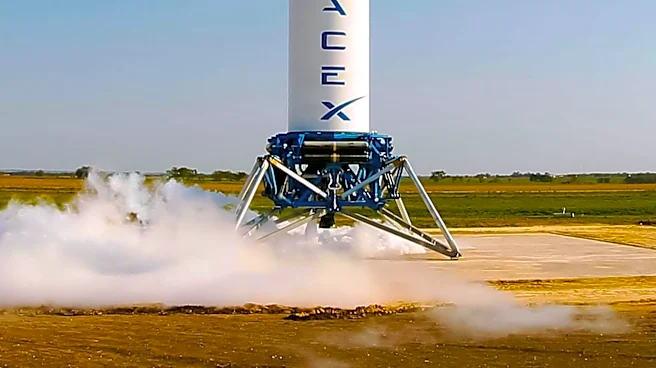
The first stage separated 137 seconds into the flight and landed approximately 250km from the launchpad six minutes later. This achievement follows a previous failed mission in December. LandSpace's Zhuque-3 rocket, which uses the company's TQ-12A liquid oxygen-methane engines, is designed for reusability, with its first stage capable of landing on four legs. The company aims for its engines and first stages to be reusable up to 20 times, significantly reducing the cost of space flight.
Why It's Important?
This successful landing by LandSpace is a major step forward for China's ambitious space program, which includes plans for large broadband satellite constellations, an expanded space station, and a moon base. Reusable rocket technology is crucial for reducing the cost and increasing the frequency of space launches, making space exploration and commercial activities more accessible. Currently, only SpaceX and Blue Origin have successfully achieved similar first-stage landings, placing LandSpace among an elite group of space technology innovators. This development enhances China's competitive position in the global space industry and could accelerate its progress in various space-related endeavors, from scientific research to commercial satellite deployment. The ability to reuse rockets will lower operational costs and increase launch cadence, impacting the economics of space access globally.
What's Next?
LandSpace's immediate next steps will involve proving the reusability of its rockets, which includes demonstrating that a used vehicle can be quickly refurbished and relaunched. While the company has designed its components for up to 20 reuses, this has yet to be proven in practice. The success of this landing will likely spur further investment and development in reusable launch vehicle technology within China. State media has already hailed this as a 'major breakthrough,' indicating strong governmental support for such advancements. China's National Space Agency is also reportedly working on other reusable technologies, suggesting a concerted national effort to enhance the country's space launch capabilities. Future developments will focus on the speed and cost-effectiveness of turning around these reusable boosters for subsequent missions.
Beyond the Headlines
The advancement in reusable rocket technology by LandSpace has broader implications beyond just cost reduction. It signifies a shift towards more sustainable space exploration, as reusable components reduce the amount of space debris and the environmental impact of manufacturing new rockets for every launch. This technological leap could also foster greater international competition and collaboration in the space sector, potentially leading to faster innovation and more affordable access to space for various nations and private entities. The success of a private Chinese company in this complex field highlights the growing role of commercial enterprises in driving national space agendas. Furthermore, it underscores the strategic importance of space capabilities for national security, economic growth, and technological prestige on the global stage.