





What's Happening?
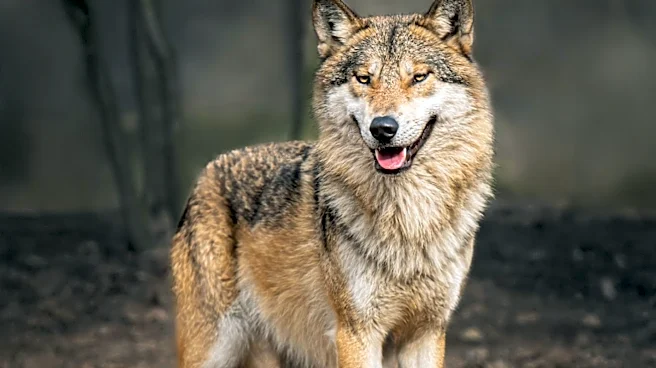
A trail camera in British Columbia captured a wild wolf exhibiting remarkable problem-solving behavior by swimming out to a buoy, hauling a fully submerged crab trap to shore, and then working to open the bait cup. This three-minute footage, recorded
on May 29, 2024, marks the first documented instance of a wild canid engaging in such a complex interaction with human fishing gear. The wolf, a female, successfully located the buoy, pulled the attached rope and trap to the beach, and then tore into the netting to access the herring and sea lion bait inside. Researchers, including Kyle Artelle and Paul Paquet, described the animal's actions as focused and deliberate, challenging previous understandings of wolf foraging flexibility and cognitive capabilities.
Why It's Important?
This discovery significantly impacts our understanding of wolf intelligence and adaptability, particularly concerning their interaction with human infrastructure. While coastal wolves, often referred to as 'sea wolves,' are known to derive a substantial portion of their diet from marine sources, this footage reveals a new level of ingenuity in obtaining food. It suggests that these predators are capable of complex problem-solving, akin to how humans might approach a mechanical challenge. The event prompts a re-evaluation of how wildlife adapts to anthropogenic environments and the potential for unexpected behaviors. It also highlights the importance of trail camera monitoring in uncovering novel ecological interactions that might otherwise go unnoticed, providing valuable data for wildlife conservation and management efforts.
What's Next?
Researchers plan to continue monitoring the camera network, originally set up for invasive European green crab surveillance, to observe if this behavior is repeated by the same wolf or other individuals within the population. The incident has already prompted the research team to reconsider camera placement strategies to better capture such unexpected interactions. Future studies may focus on determining the prevalence of this behavior, whether it is learned socially among wolves, and its broader implications for wolf foraging strategies in coastal environments. The debate among experts regarding whether this constitutes 'tool use' in the strict biological sense will likely continue, driving further research into canid cognition and problem-solving abilities.
Beyond the Headlines
The wolf's interaction with the crab trap raises deeper questions about the evolving relationship between wildlife and human activities. As human presence expands and encroaches upon natural habitats, animals are increasingly exposed to human-made objects and structures. This incident serves as a compelling example of how wildlife can adapt and even exploit these new elements in their environment for survival. It underscores the need for a more nuanced understanding of animal intelligence and behavioral plasticity, moving beyond traditional classifications. Furthermore, it highlights the ethical considerations surrounding human impact on ecosystems, as our tools and waste can inadvertently become resources or challenges for wildlife, potentially altering natural foraging behaviors and ecological dynamics in unforeseen ways.