


What's Happening?
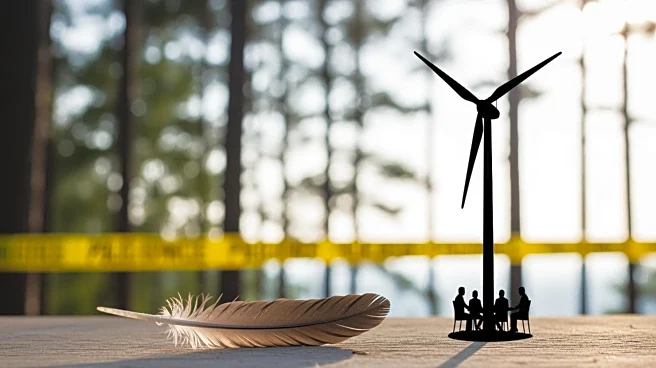
The University of Minnesota is facing a proposed fine of over $14,000 after a wind turbine at its Eolos Wind Energy Research Field Station in Dakota County was responsible for the death of an American bald eagle. The incident, which involved the turbine dismembering
the eagle, violated the Bald and Golden Eagle Protection Act as the university did not have an 'incidental take permit.' The U.S. Fish and Wildlife Service has urged the university to reassess the turbine's impact on eagles and consider applying for a long-term permit. The turbine was part of a project funded by a $7.9 million grant from the Obama administration's Department of Energy in 2010. This incident is part of a broader issue, as other renewable energy projects have also faced fines for similar incidents.
Why It's Important?
This incident highlights the ongoing conflict between renewable energy development and wildlife conservation. The fine imposed on the University of Minnesota underscores the legal and ethical responsibilities of energy projects to protect wildlife, particularly species like the bald eagle, which is a national symbol. The situation raises questions about the balance between advancing green energy initiatives and ensuring the protection of endangered species. It also reflects broader scrutiny on renewable energy projects, which are sometimes criticized for their environmental impact despite their role in reducing carbon emissions. The case may influence future regulatory measures and the implementation of more stringent wildlife protection protocols in energy projects.
What's Next?
The University of Minnesota is currently reviewing the notice from the Department of the Interior. It may need to apply for a long-term permit to continue operating the turbine without further legal issues. The incident could prompt other institutions and companies involved in renewable energy to reassess their operations and implement better wildlife protection measures. Additionally, there may be increased regulatory oversight and potential policy changes to ensure that renewable energy projects do not harm protected species. Stakeholders in the renewable energy sector might also engage in discussions to find solutions that balance energy development with wildlife conservation.