

What's Happening?
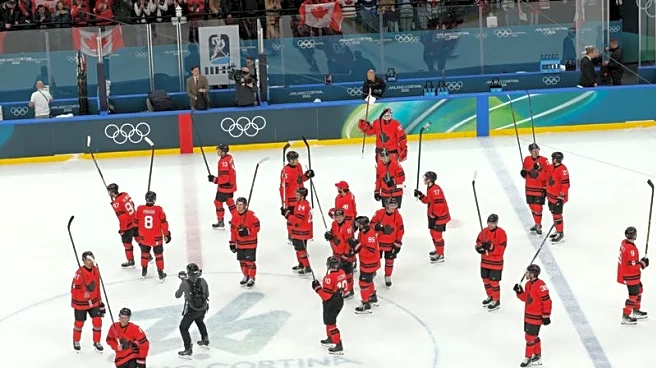
During a men's hockey game at the Winter Olympics in Milan, two fans, Vita Kalniņa and her husband Alexander Kalniņš, displayed a Greenland flag as a symbol of European support for Greenland and Denmark. The couple, who are Latvian hockey fans residing
in Germany, raised the flag during the warmups and when Denmark scored the opening goal against the U.S. The U.S. team eventually won the game 6-3. The gesture was intended to show European unity and support for Greenland amidst recent rhetoric from President Trump about taking control of the island. Venue staff later asked the couple to put the flag away, citing safety concerns over potential aggressive reactions from American fans. Despite this, the couple felt their message was successfully conveyed.
Why It's Important?
The incident highlights ongoing geopolitical tensions involving Greenland, a semiautonomous territory of Denmark. President Trump's comments about acquiring Greenland have stirred national pride in Denmark and support across Europe for Greenland's autonomy. The display of the Greenland flag at an international sporting event underscores the intersection of sports and politics, as well as the broader European sentiment against perceived American aggression. This event also reflects the complex relationship between the U.S. and Denmark, particularly regarding territorial sovereignty and international diplomacy. The fans' actions and the subsequent response from venue staff illustrate the challenges of maintaining neutrality in sports amid political tensions.
What's Next?
While the immediate situation at the hockey game was resolved, the broader geopolitical implications remain. Denmark and Greenland may continue to face diplomatic challenges as they navigate their relationship with the U.S. and address internal and external pressures regarding Greenland's status. The incident may prompt further discussions within the European Union about supporting member states and territories against external pressures. Additionally, the International Olympic Committee may review its policies on flag displays to prevent similar incidents in the future, ensuring that sports events remain focused on athletic competition rather than political statements.
Beyond the Headlines
The display of the Greenland flag at the Olympics raises questions about the role of sports as a platform for political expression. While some argue that sports should remain apolitical, others see international events as opportunities to highlight global issues. This incident also touches on the cultural identity of Greenlanders and their desire for recognition on the world stage. As Greenland continues to assert its autonomy, the support from European fans may bolster its position in negotiations with Denmark and other international entities. The event also reflects the broader trend of sports being used as a medium for political and social commentary.