


What's Happening?
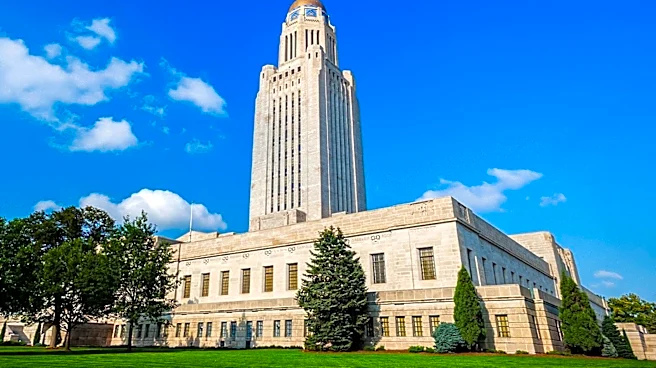
Legislative changes in Nebraska have resulted in the state's minimum wage increasing by 29 cents less next year than what voters approved in 2022. Voters had tied annual minimum wage increases to the Consumer Price Index (CPI) for goods and services in the Midwest
region, which showed a 3.6% rise between August 2025 and August 2026. However, lawmakers this spring locked the annual increase at a fixed 1.75%. This legislative action means that instead of the voter-approved $15.55 per hour, the minimum wage will rise to $15.26 on January 1, 2027. Additionally, a new 'youth minimum wage' of $13.50 hourly for 14 and 15-year-olds will take effect on July 19.
Why It's Important?
This legislative alteration to the minimum wage is important because it directly impacts the financial well-being of hundreds of thousands of minimum-wage workers in Nebraska, resulting in an annual difference of $598 compared to the voter-approved measure. Critics argue that this decision undermines the will of the people and exacerbates an ongoing affordability crisis, especially given the higher cost of living in cities like Omaha and Lincoln. Proponents of the legislative change, including State Sen. Jane Raybould and State Sen. Stan Clouse, emphasized predictability for businesses, arguing that a fixed rate is easier to budget for than a fluctuating CPI. This divergence highlights a fundamental tension between voter mandates for worker compensation and legislative efforts to support business predictability, with significant implications for both labor and economic policy in the state.
What's Next?
The legal battles surrounding the minimum wage are ongoing. Nebraska Attorney General Mike Hilgers has sued to block local ordinances in Omaha and Lincoln that sought to reinstate the voter-approved cost-of-living increases and prohibit the new lower youth wage. A Lancaster County District Judge has already blocked Lincoln's ordinance, while a ruling on Omaha's ordinance, set to take effect on October 1, is pending. The outcome of these legal challenges will determine the final minimum wage structure in Nebraska's two largest cities. Furthermore, the debate over the minimum wage and its impact on youth employment and business costs is likely to continue, potentially influencing future legislative sessions and local policy decisions.
Beyond the Headlines
This situation in Nebraska reflects a broader national debate about the balance between direct democracy (voter initiatives) and legislative authority, particularly concerning economic policies like minimum wage. The argument for business predictability versus ensuring a living wage for workers is a recurring theme across the U.S. The introduction of a 'youth minimum wage' also raises questions about its potential impact on youth employment rates and whether it creates a two-tiered wage system. This development could set a precedent for how states interpret and implement voter-approved measures, potentially leading to increased scrutiny of legislative actions that modify or circumvent direct democratic outcomes. The ethical implications involve the state's responsibility to its lowest-paid workers versus its role in fostering a stable business environment, especially during periods of economic uncertainty and high inflation.