







What's Happening?
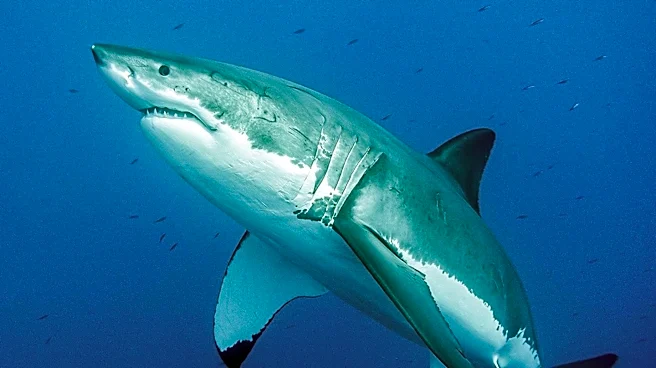
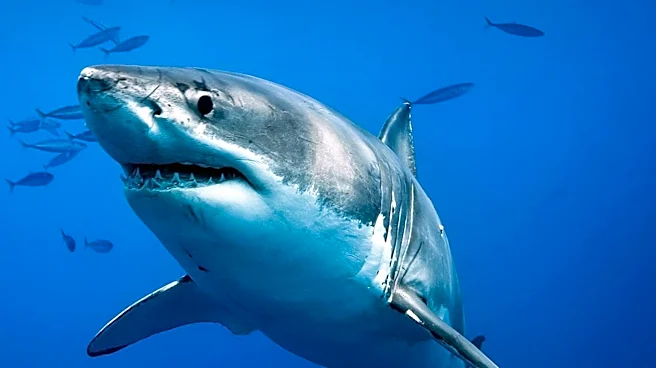
Drone footage captured up to seven great white sharks feeding near Pine Point Beach in Scarborough, Maine. The sightings occurred on August 4 and 5, with authorities noting that baitfish and seals likely attracted the sharks. Visitors were advised to stay
close to shore, avoid swimming alone, and follow lifeguard instructions. Despite the presence of these predators, no aggressive encounters with swimmers or boaters have been reported. The Gulf of Maine's warmer waters and a recovering seal population are believed to contribute to increased shark sightings in the area.
Why It's Important?
The presence of large predators like great white sharks near popular beaches can significantly impact public safety and local tourism. As ocean temperatures rise and prey populations shift, interactions between marine life and humans may become more frequent. This situation underscores the importance of monitoring tools such as drones and lifeguard alerts to ensure public safety while allowing marine wildlife to thrive. The increased sightings highlight the need for coastal communities to adapt to changing ocean conditions and implement effective safety measures.
What's Next?
Coastal communities may need to enhance their monitoring and safety protocols to address the potential for more frequent shark sightings. This could involve increased use of drones, improved lifeguard training, and public education campaigns to inform beachgoers about safety precautions. As ocean conditions continue to evolve, these measures will be crucial in balancing human activity with marine conservation efforts.