





What's Happening?
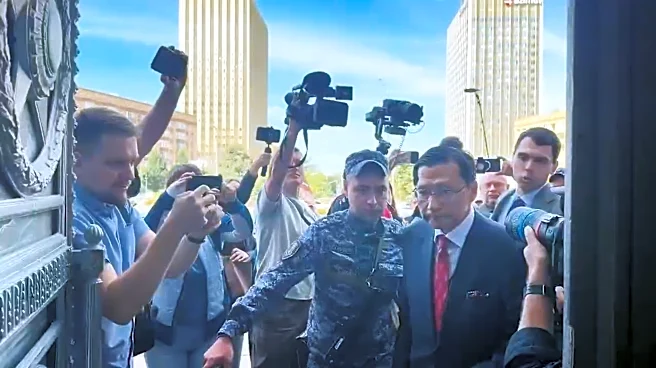
Ghanaian Foreign Affairs Minister Samuel Okudzeto Ablakwa has met with his Russian counterpart, Sergei Lavrov, to address concerns regarding the recruitment of Ghanaian citizens into the Russian military. This development follows reports of at least 62
Ghanaians having died while fighting for Russia in the Ukraine war, an increase from 55 reported in February. Russia's recruitment of African nationals has become a growing concern across the continent, with allegations that some individuals were lured into military contracts through misleading job offers. Countries like Kenya and South Africa have also been working to repatriate their citizens who were reportedly deceived into signing contracts with the Russian military. An investigation by INPACT suggests that over 1,400 African nationals from various countries, including Ghana, Nigeria, Kenya, Uganda, and South Africa, were recruited to fight for Russia between 2023 and 2025, with an estimated 316 fatalities.
Why It's Important?
This situation highlights the complex geopolitical landscape where African nations are navigating their relationships with global powers amidst ongoing conflicts. The recruitment of African citizens by Russia for military service in Ukraine raises significant human rights and ethical concerns, particularly given the allegations of deceptive recruitment practices. For Ghana, the loss of its citizens in a foreign conflict, potentially under false pretenses, is a serious matter that impacts national security and citizen welfare. It also underscores the vulnerability of individuals in certain regions to such recruitment, possibly due to economic hardship or lack of information. The discussions between Ghana and Russia also touch upon broader security cooperation, including combating extremist groups in the Sahel region, indicating a multifaceted relationship that extends beyond the immediate recruitment issue.
What's Next?
Following the meeting between Minister Ablakwa and Minister Lavrov, Russia has reportedly assured Ghana that it will take steps to halt the recruitment of Ghanaians into its military. The effectiveness and implementation of these steps will be crucial to monitor. Ghana, along with other African nations, will likely continue efforts to ensure the safety and repatriation of its citizens who may have been recruited. Furthermore, the Economic Community of West African States (ECOWAS) and the Alliance of Sahel States (AES) are reportedly working on a framework to guide engagement with international partners, including Russia, on security cooperation. This framework could establish clearer guidelines and protections for citizens in the region, potentially preventing similar recruitment issues in the future.
Beyond the Headlines
The issue of African nationals being recruited to fight in the Ukraine war points to deeper socioeconomic factors that make individuals susceptible to such offers. Economic disparities, limited opportunities, and the allure of perceived better prospects can drive individuals to take risks, sometimes without full knowledge of the consequences. This situation also reflects Russia's broader strategy to expand its influence in Africa, not only through security cooperation but also by potentially leveraging human resources. The involvement of private military contractors and the opaque nature of some recruitment processes further complicate accountability and protection efforts. The ongoing dialogue between African nations and Russia, particularly concerning security and military engagement, will be critical in shaping future international relations and addressing the welfare of African citizens caught in global conflicts.