







What's Happening?
Israel and Lebanon have agreed to renew their ceasefire, brokered by the United States, with the aim of continuing talks for a comprehensive peace deal. The agreement, announced in a joint statement by the U.S., Israel, and Lebanon, follows Israeli forces'
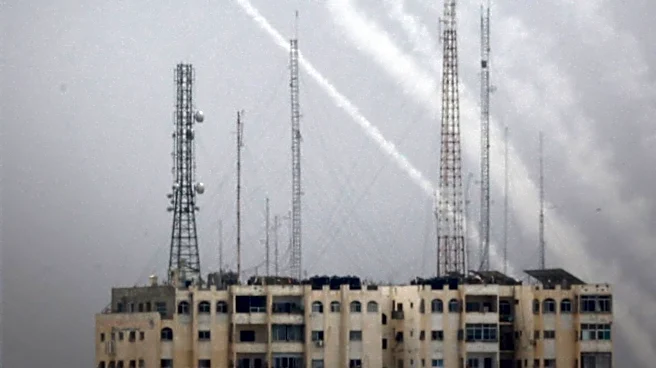
significant incursion into Lebanon. The deal includes contentious points such as the creation of 'pilot' security zones in Lebanon, from which the Iran-backed Hezbollah group would be banned, and a stipulation for the group's eventual disbanding. Despite the ceasefire, fighting has continued, with Hezbollah resuming attacks after Israeli strikes in Lebanon. The ceasefire is contingent on Hezbollah halting its attacks and withdrawing from areas south of the Litani River, a boundary established by a 2006 U.N. buffer zone.
Why It's Important?
The renewal of the ceasefire is significant as it attempts to stabilize a volatile region and prevent further escalation between Israel and Hezbollah. The agreement aims to separate Lebanon from the broader Iran conflict, which has implications for regional stability. The deal pressures Lebanon's military to exert control in Hezbollah-dominated areas, which could lead to internal conflict. The ceasefire's success hinges on Hezbollah's compliance, and its failure could lead to renewed hostilities, affecting regional security and international diplomatic relations.
What's Next?
The next steps involve advancing the creation of pilot zones controlled by the Lebanese Armed Forces, excluding non-state actors like Hezbollah. The U.S. will continue to mediate talks between Israel and Lebanon to reach a comprehensive peace agreement. However, the ongoing military actions by Israel and Hezbollah's resistance to the terms pose challenges to the ceasefire's durability. The international community will likely monitor the situation closely, with potential diplomatic interventions if the ceasefire fails.