







What's Happening?
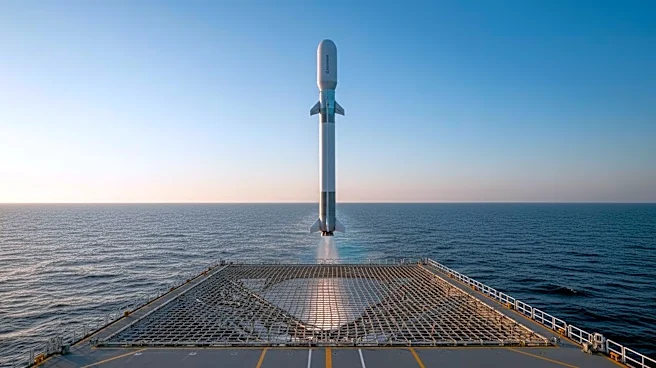
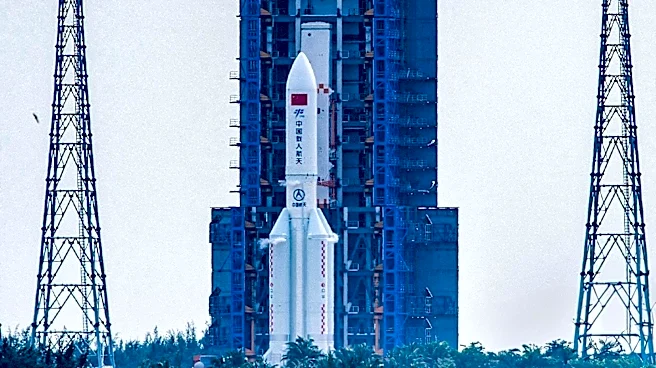
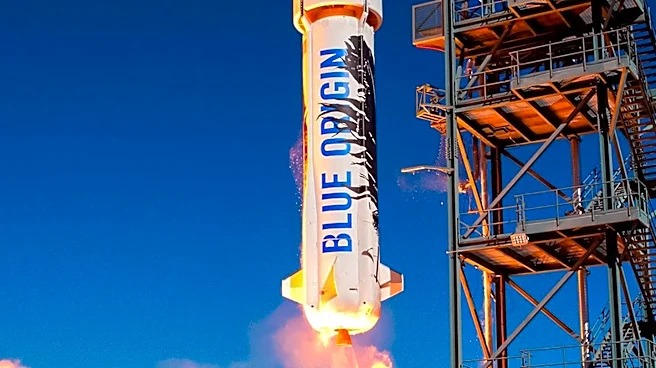
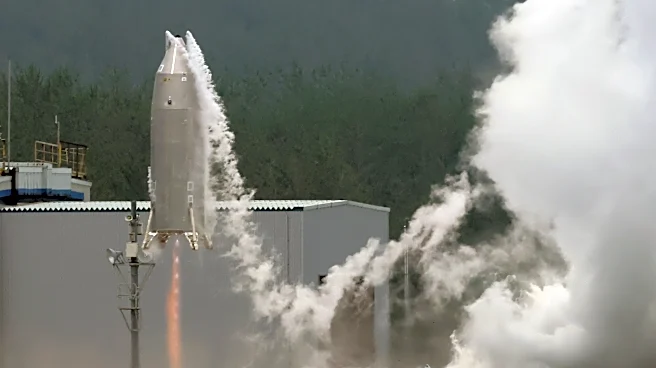
China has achieved a significant milestone in its space program by successfully recovering the first stage of a Long March-10B rocket at sea. This marks the first time China has managed to recover a rocket booster, a practice that has been pioneered by companies
like SpaceX and Blue Origin in the United States. The Long March rocket was launched from Hainan Island, and after separation, the first stage returned to a platform in the sea. This development is part of China's efforts to reduce launch costs by reusing rocket components, similar to the strategies employed by SpaceX, which has successfully landed over 600 Falcon boosters. The reusable configuration of the Long March rocket can carry a payload of up to 35,275 pounds into low Earth orbit.
Why It's Important?
The successful recovery of a rocket booster by China signifies a major advancement in its space capabilities, aligning it with global leaders in space technology like SpaceX. This development could potentially lower the costs of space launches for China, making its space program more competitive internationally. The ability to reuse rocket components is a significant cost-saving measure, as demonstrated by SpaceX's extensive use of reusable boosters. This achievement not only enhances China's position in the space race but also indicates a growing trend towards sustainable and cost-effective space exploration. The move could have implications for international space collaboration and competition, as other countries, such as Japan, are also pursuing similar technologies.
What's Next?
Following China's successful recovery of a rocket booster, it is expected that the country will continue to refine and expand its reusable rocket technology. This could lead to more frequent and cost-effective launches, potentially increasing China's presence in the commercial space launch market. Additionally, other countries and private companies may accelerate their efforts to develop similar technologies to remain competitive. The international space community will likely monitor China's progress closely, as advancements in reusable rocket technology could influence global space exploration strategies and partnerships.