


What's Happening?
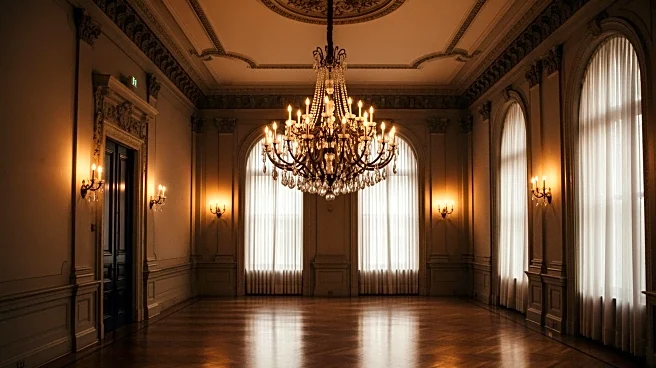
The National Trust for Historic Preservation is challenging President Trump's proposal to construct a new ballroom at the White House. Carol Quillen, the president of the National Trust, expressed trust in Will Scharf, the Trump-appointed chairman of the National Capital
Planning Commission, to conduct a thorough review of the proposal. The Trust has filed a lawsuit seeking to halt construction until the project undergoes independent reviews and public commentary. A federal judge has denied a temporary restraining order but scheduled a hearing for a preliminary injunction in January. The proposed ballroom, estimated to cost $400 million, is intended to replace the East Wing, which was demolished in October. The Trust argues that the project should have been submitted for review by relevant commissions and Congress before proceeding.
Why It's Important?
This development is significant as it involves the preservation of one of the nation's most iconic buildings, the White House. The National Trust's lawsuit underscores the importance of public participation and adherence to legal processes in decisions affecting historic resources. The outcome of this case could set a precedent for how future modifications to national landmarks are handled. The proposed ballroom, with its substantial cost and scale, raises questions about the use of private versus public funds and the transparency of such projects. The Trust's actions highlight the tension between preservation efforts and modernization initiatives within historic sites.
What's Next?
The next steps involve a scheduled court hearing in January to consider the National Trust's motion for a preliminary injunction. If granted, this could delay the ballroom's construction until all necessary reviews are completed. The White House has yet to submit the final plans to the National Capital Planning Commission, which will be crucial in determining the project's future. Stakeholders, including preservationists and government officials, will likely continue to debate the project's merits and compliance with federal laws. The outcome could influence future White House renovations and the role of public oversight in such projects.