


What's Happening?
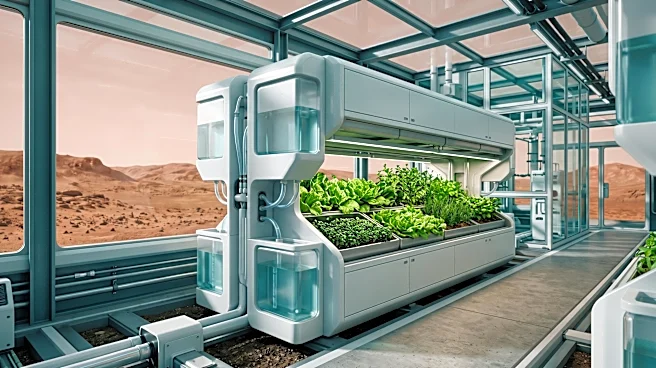
The European Space Agency (ESA) Discovery program has funded an early-stage activity that successfully developed a proof-of-concept membrane for hydroponic plant cultivation in space. This innovation, known as a root-penetrable sealing membrane (RSM),
aims to address the challenges of growing food in microgravity environments where water does not behave as it does on Earth. On Earth, gravity keeps nutrient solutions at the bottom of tanks in deep-water culture systems, but in space, water can flow freely, potentially drowning plant stems while roots struggle to find moisture. The RSM features a two-layer design: a felt top layer and a water-repellent silicone-based coating on the underside. This design allows seeds to germinate on the felt, with roots growing through both layers to access the nutrient solution below, while the coating prevents leakage around the stem. Initial tests with kale and pak choi showed that approximately three-quarters of seedlings successfully penetrated the membrane, and plants remained healthy after six weeks, though biomass production was slightly lower compared to standard systems.
Why It's Important?
This development is crucial for future long-duration space exploration missions, particularly as astronauts venture farther from Earth. The ability to grow food reliably in space reduces reliance on resupply missions, which are costly and logistically complex, and minimizes the amount of hardware and crew time required. Hydroponic systems, especially substrate-free ones, are ideal for space due to their efficiency in nutrient recycling and reduced weight compared to soil-based methods. The challenge of managing nutrient solutions in microgravity has been a significant hurdle, and the RSM offers a potential solution by ensuring water remains in the root zone. While the current prototype showed some leakage as plants grew, the concept demonstrates a viable path toward sustainable food production in environments lacking gravity, directly impacting the feasibility and self-sufficiency of future human spaceflight and colonization efforts.
What's Next?
The research team is currently working to publish their initial findings and secure additional funding to continue the project. Future development will focus on refining the RSM materials and production methods to better accommodate the movement and growth of plant stems, aiming to reduce leakage and improve biomass production. Another direction involves adapting the growing system itself to minimize plant stem movement, possibly through mechanical support or by reducing the pressure used to circulate the nutrient solution. These next steps are critical for transitioning the proof-of-concept into a more robust and reliable system suitable for actual space missions. Continued research and development in this area will be essential for enabling long-term human presence beyond Earth, as efficient and sustainable food production is a fundamental requirement for such endeavors.
Beyond the Headlines
The development of the root-penetrable sealing membrane (RSM) highlights a broader shift towards self-sustaining systems in space exploration, moving beyond mere survival to thriving in extraterrestrial environments. This innovation touches upon the ethical considerations of long-duration space travel, where psychological well-being can be enhanced by fresh food and a connection to nature. Furthermore, the principles behind the RSM could have terrestrial applications, particularly in controlled environment agriculture (CEA) or in regions with limited water resources, where efficient hydroponic systems are increasingly valuable. The interdisciplinary nature of this research, combining material science, botany, and aerospace engineering, underscores the complex challenges and innovative solutions required for advancing human capabilities in space. It also emphasizes the importance of international collaboration, as exemplified by ESA's funding, in pushing the boundaries of scientific and technological progress for the benefit of both space exploration and life on Earth.