

What's Happening?
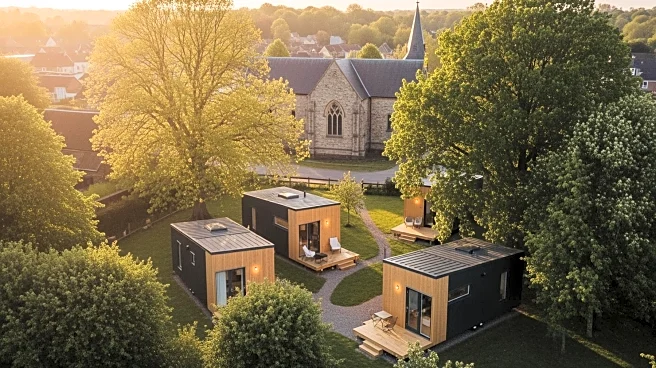
In response to the ongoing housing shortage in the United States, several churches are converting their underutilized land into affordable housing. This initiative, known as the 'Yes in God’s Back Yard' (YIGBY) movement, involves faith-based institutions
using their land to address the housing crisis. For instance, the Little Rock AME Zion church in Charlotte, North Carolina, developed a previously unused parcel of land into 105 apartment units, half of which are designated as affordable housing. This movement is gaining traction as churches leverage their existing land to create housing solutions, often overcoming zoning and funding challenges. The Christian Cultural Center in Brooklyn, New York, is another example, having partnered with the Gotham Organization to develop a $1 billion project called Innovative Urban Village, expected to be completed by 2031.
Why It's Important?
The YIGBY movement is significant as it addresses the critical shortage of affordable housing in the U.S., where rental costs have outpaced inflation and home ownership remains out of reach for many. By utilizing church land, these projects reduce costs associated with acquiring new land, making affordable housing projects more feasible. This initiative not only provides housing but also strengthens community ties, as churches are trusted institutions within their neighborhoods. The movement has received bipartisan legislative support, with bills in Congress proposing grants to facilitate such projects. This approach could serve as a model for other communities facing similar housing challenges.
What's Next?
Legislation supporting the YIGBY movement is under review in Congress, with potential grants to aid these projects. States like California and Florida have already passed laws to facilitate church-led housing developments. As more churches explore this option, the movement could expand, potentially easing the housing crisis in various regions. Community interest is high, with other churches visiting successful projects to learn and replicate the model. The success of these initiatives could influence future housing policies and encourage more faith-based organizations to participate.
Beyond the Headlines
The YIGBY movement highlights a shift in how religious institutions can contribute to societal needs beyond traditional roles. By addressing housing shortages, churches are redefining their community impact, potentially leading to broader social and economic benefits. This approach also raises questions about the role of religious organizations in public policy and urban development, potentially setting a precedent for future collaborations between faith-based groups and government entities.