




What's Happening?
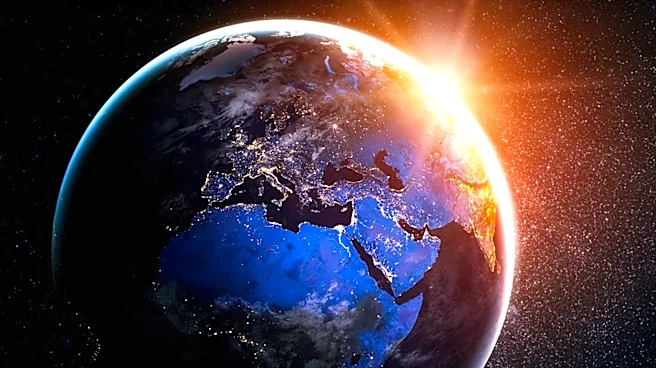
An equinox is defined as one of the two times in the year when day and night are nearly equal in length. This astronomical term also refers to the corresponding point in the sky where the sun’s path crosses the equator. The two equinoxes are commonly
known as the vernal or spring equinox and the autumnal or fall equinox. It is important to distinguish an equinox from a solstice; an equinox signifies equal day and night, while a solstice occurs when the sun reaches its farthest north or south position, resulting in the longest or shortest day of the year. While people often use 'equinox' to refer to the day itself, it can also precisely denote the astronomical point in the celestial sphere where the celestial equator intersects the ecliptic.
Why It's Important?
Understanding the definition of an equinox is important for various reasons, particularly in fields like astronomy, meteorology, and even cultural practices. Astronomically, the equinox marks significant points in Earth's orbit around the sun, influencing seasonal changes and the length of daylight hours. For meteorologists, these events are crucial for tracking weather patterns and climate shifts. Culturally, many societies around the world have historically observed equinoxes with festivals and traditions, reflecting humanity's deep connection to celestial cycles. Clarifying the distinction between an equinox and a solstice helps prevent common misconceptions and promotes a more accurate understanding of these fundamental astronomical phenomena that impact life on Earth, including agricultural cycles and energy consumption patterns related to daylight.
What's Next?
As the Earth continues its orbit, the next equinox will occur, marking the transition to a new season. Depending on the time of year, this will be either the vernal (spring) equinox, signaling the start of spring in the Northern Hemisphere, or the autumnal (fall) equinox, marking the beginning of autumn. These events will continue to be observed and studied by scientists to monitor long-term astronomical and climatic trends. Public awareness and educational efforts will likely continue to clarify the scientific definitions and cultural significance of equinoxes, ensuring a broader understanding of these natural occurrences. The precise timing of these events will be calculated and announced by astronomical observatories and scientific institutions.
Beyond the Headlines
The concept of the equinox extends beyond its scientific definition, influencing human perception of time, cycles, and balance. Historically, the equal length of day and night at the equinox has symbolized harmony and equilibrium in many cultures, leading to various spiritual and philosophical interpretations. This natural balance point has often been associated with themes of renewal, harvest, and introspection. In a modern context, understanding the equinox can foster a deeper appreciation for Earth's celestial mechanics and our place within the solar system. It also highlights the interconnectedness of natural phenomena with human activities, from agriculture to energy planning, underscoring the subtle yet profound ways astronomical events shape our daily lives and long-term planning.