



What's Happening?
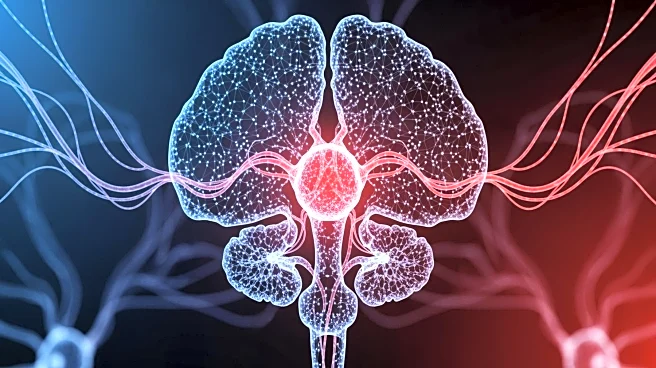
Scientists have discovered a brainstem region, the lateral parafacial area, that may contribute to high blood pressure. This region, responsible for automatic processes like breathing, has been found to communicate with nerves that constrict blood vessels,
leading to increased blood pressure. The study, led by Professor Julian Paton from the University of Auckland, suggests that targeting this brain region could help manage hypertension. Researchers found that signals activating this area also come from carotid bodies in the neck, which detect blood oxygen levels. This discovery opens the possibility of using medication to target these carotid bodies, potentially offering a safer treatment for high blood pressure without affecting the entire brain.
Why It's Important?
This research could significantly impact the treatment of hypertension, a common condition affecting millions of Americans. By identifying a specific brain region involved in blood pressure regulation, new therapies could be developed that target this area more precisely, reducing the need for drugs that affect the entire brain. This approach could lead to more effective and safer treatments, particularly for patients with conditions like sleep apnea, where carotid bodies are more active. The findings also highlight the complex role of the brain in regulating bodily functions and the potential for innovative treatments that address these mechanisms directly.
What's Next?
The next steps involve further research to develop and test medications that can safely target the carotid bodies and the lateral parafacial region. Clinical trials will be necessary to determine the efficacy and safety of these potential treatments in humans. Additionally, researchers may explore the implications of these findings for other conditions related to blood pressure and breathing, such as sleep apnea. The medical community will likely monitor these developments closely, as they could lead to significant advancements in managing hypertension and related disorders.