





What's Happening?
Dozens of Afghan medical students in Pakistan are facing expulsion from their colleges and universities following an order from the Pakistan Medical and Dental Council (PMDC). The PMDC's directive, which states that "no form of facilitation of Afghan nationals
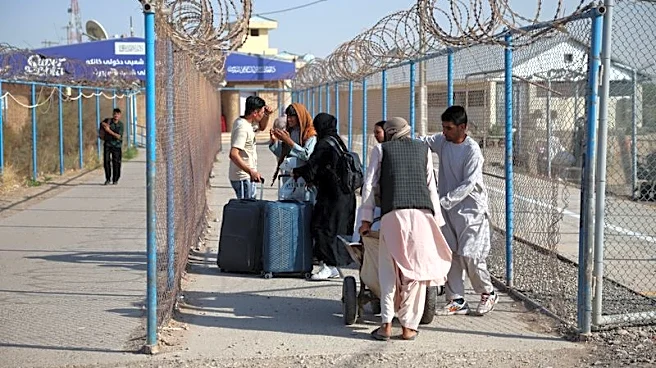
is permitted for the current academic session" and requires previously enrolled Afghan students to return to Afghanistan, has sparked multiple court petitions. This move comes amidst a significant downturn in relations between Pakistan and Afghanistan since the Taliban's return to power in 2021, which escalated into weeks of conflict earlier this year. Over the past three years, more than 2.5 million Afghans have been expelled or voluntarily left Pakistan as part of a deportation drive. Human Rights Watch and Amnesty International have condemned the PMDC order, particularly highlighting the plight of Afghan women who are already banned from studying in their home country. Lawyers representing the students are challenging the order, arguing that it denies the medics an opportunity to be heard.
Why It's Important?
The expulsion of Afghan medical students from Pakistan has significant humanitarian and geopolitical implications. For the students, many of whom are women banned from education in Afghanistan, this decision represents the loss of their only opportunity to pursue higher education and build a future. It exacerbates the existing educational crisis in Afghanistan and could lead to a severe shortage of medical professionals in the long run. Geopolitically, this action reflects the deteriorating relations between Pakistan and the Taliban government, using vulnerable individuals as leverage in a broader political dispute. The mass deportation drive and the expulsion of students could further destabilize the region, creating a larger refugee crisis and increasing anti-Pakistan sentiment among Afghans. It also raises questions about international obligations to protect students and refugees, especially those fleeing oppressive regimes, and the role of neighboring countries in providing sanctuary and educational opportunities.
What's Next?
The fate of the Afghan medical students now rests with the Pakistani courts, with a hearing in Lahore expected to determine the outcome for several dozen students. While a judge has temporarily suspended the expulsion order at the provincial level, similar petitions have been rejected in other provinces, and students' records have already been expunged in some cases. If the Lahore petition fails, lawyers indicate the case could be taken to Pakistan's Federal Constitutional Court. The international community, including human rights organizations, will likely continue to pressure Pakistani authorities to reverse the order, emphasizing the humanitarian impact and the specific vulnerability of female students. The ongoing diplomatic tensions between Pakistan and Afghanistan will likely influence the final decision, making the students' future uncertain.
Beyond the Headlines
This situation highlights the profound human cost of geopolitical tensions and the weaponization of education in international relations. The expulsion of medical students, particularly women, underscores the double burden faced by Afghan women who are denied education at home and now abroad. It also exposes the fragility of educational opportunities for refugees and asylum seekers, who often rely on the goodwill and policies of host countries. The incident could lead to a broader re-evaluation of how international aid and educational programs are structured to support displaced populations, ensuring that such opportunities are not easily rescinded due to political shifts. Furthermore, it raises ethical questions about the responsibility of nations to provide humanitarian assistance and uphold human rights, even amidst strained diplomatic relations. The long-term consequence could be a further brain drain from Afghanistan and a deepening of its humanitarian crisis.